The demand for thread lift in Glasgow has grown considerably over the past several years, and it is not difficult to understand why. A generation of patients who watched their parents navigate the recovery rooms and visible scars of surgical facelifts are now seeking something altogether different — a procedure that addresses genuine facial descent without the theatre, the downtime, or the tell-tale signs of having "had something done." Thread lifting, in its various modern forms, has stepped into that space with increasing clinical credibility.
Glasgow's aesthetic medicine scene has matured significantly. The city now hosts a range of practitioners offering everything from entry-level dissolvable PDO threads to highly advanced permanent suspension systems that require a level of anatomical expertise more commonly associated with surgical training. Understanding the difference between these approaches — and knowing what questions to ask before committing to any procedure — is essential for anyone considering a thread lift in Scotland's largest city.
This guide covers the full picture: the science behind thread lifting, the different thread types available in Glasgow, what realistic results look like, how to identify a genuinely qualified practitioner, and how thread lifting compares to other non-surgical rejuvenation options currently available in the city.
What Is a Thread Lift and How Does It Work?
A thread lift is a minimally invasive cosmetic procedure in which medical-grade threads — fine sutures made from various materials — are inserted beneath the skin to physically lift and reposition sagging facial tissue. Unlike injectables such as dermal fillers, which add volume to compensate for the appearance of descent, thread lifting works by mechanically repositioning tissue that has genuinely dropped due to the ageing process.
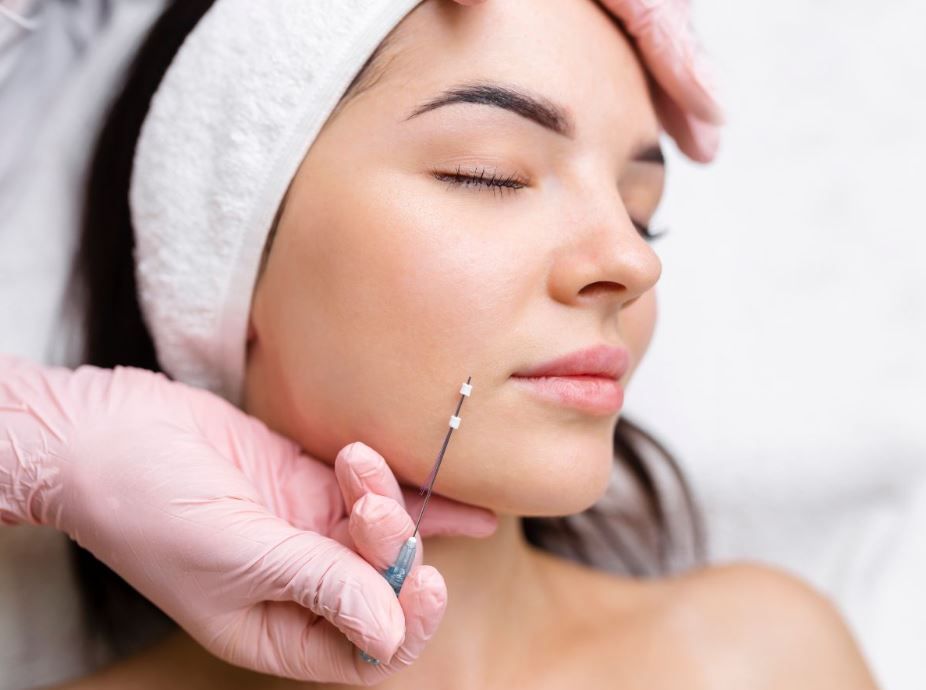
The fundamental mechanism is straightforward: threads are passed through a cannula or needle into the subcutaneous layer of the face, where tiny barbs, cones, or coils grip the tissue. The practitioner then applies controlled tension along a predetermined vector — essentially pulling the tissue upward and anchoring it in a more youthful position. The result is an immediate, visible lift that continues to improve over subsequent weeks as the body responds to the presence of the threads by producing new collagen.
Research published in the journal Clinical, Cosmetic and Investigational Dermatology confirms that thread lifting materials stimulate a biological response in surrounding tissue, with collagen formation around the threads contributing to longer-term skin quality improvements beyond the immediate mechanical lift. A 2023 validation study published in Aesthetic Surgery Open provided the first objective measurements of anatomical lifting achieved through non-surgical thread procedures, lending further scientific credibility to what had previously been a treatment area with limited peer-reviewed evidence.
Thread lifting works not by pulling skin tighter, but by repositioning the deeper tissue structures that have descended over time — restoring facial proportions rather than simply stretching the surface. The Aesthetic Journal — Aesthetic Treatments
Thread Types Available in Glasgow: PDO, PLLA, and Spring Threads
Not all thread lifts are the same, and the distinction matters enormously when it comes to both results and longevity. Glasgow clinics currently offer several different thread systems, each with distinct properties, indications, and technical requirements.
PDO (Polydioxanone) Threads
PDO threads are the most widely available thread type in the UK and represent the entry point for most patients exploring thread lifting for the first time. Polydioxanone is a synthetic, dissolvable polymer that has been used in surgical sutures for decades, making it one of the most thoroughly tested materials in aesthetic medicine. PDO threads are gradually absorbed by the body over approximately six to twelve months, during which time they stimulate collagen and elastin production in the surrounding tissue.
Within the PDO category, there are several subtypes. Mono threads are smooth, single-strand threads used primarily for skin quality improvement and fine texture rather than significant lifting. Barbed or cog threads carry tiny projections along their length that grip tissue and provide a more pronounced lifting effect. Screw or tornado threads are twisted around a needle to create volume and are often used in areas such as the cheeks or under the eyes.
The primary limitation of PDO threads is their temporary nature. Because the threads dissolve, the mechanical lift they provide diminishes as the material is absorbed. The collagen stimulation they trigger does provide some ongoing benefit, but patients typically require repeat treatment every twelve to eighteen months to maintain results. For patients seeking a more durable solution, this cycle of retreatment can become both inconvenient and costly over time.
PLLA (Poly-L-Lactic Acid) Threads
PLLA threads are made from the same material as Sculptra, a well-established collagen biostimulator. They dissolve more slowly than PDO threads — typically over twelve to eighteen months — and are particularly valued for their collagen-stimulating properties. PLLA threads tend to produce a more gradual, progressive improvement in skin quality and are often chosen for patients whose primary concern is skin texture and firmness rather than significant structural lifting.
Spring Thread Lifts: The Advanced Option
At the more advanced end of the spectrum, Spring Thread Lifts represent a fundamentally different approach to facial lifting. Rather than using dissolvable threads that provide a temporary mechanical effect before being absorbed, spring threads are permanent suspension sutures made from a flexible, elastic material that maintains tension over time while adapting to natural facial movement.
The spring mechanism is the key differentiator. Unlike rigid permanent sutures, which can create an unnatural appearance as the face moves, spring threads flex with expression — absorbing movement rather than resisting it. This reduces the risk of visible thread distortion and improves long-term integration with the face. Over time, the body forms collagen around the threads, reinforcing their support and contributing to progressive improvement in skin quality in the treated area.
Spring Thread Lifts are anchored into deeper tissue layers — targeting the SMAS (superficial musculoaponeurotic system) and ligamentous structures rather than simply the subcutaneous fat — which means the lift comes from repositioning genuine anatomical structures rather than pulling skin. This deeper approach is what allows spring threads to address more significant facial descent and provide results that can last several years rather than months.
The technical demands of spring thread lifting are considerably higher than those of standard PDO procedures. Correct vector planning, precise depth control, and an in-depth understanding of facial anatomy are essential — errors in placement are more difficult to correct with permanent threads than with dissolvable ones. This is why spring thread lifting should only be undertaken by practitioners with advanced training and extensive experience in facial anatomy.
The American Society of Plastic Surgeons notes that thread lifts are most effective for patients with mild to moderate facial laxity. Patients with significant skin excess may achieve better long-term outcomes from surgical intervention. A thorough consultation with a qualified practitioner is essential to determine the most appropriate treatment pathway for your anatomy and goals.
Thread Lift Glasgow: What Areas Can Be Treated?
Thread lifting is a versatile technique that can be applied to multiple areas of the face and, in some cases, the neck. The specific areas suitable for treatment depend on the thread type used, the degree of laxity present, and the practitioner's assessment of facial anatomy. The most commonly treated areas in Glasgow clinics include the following.
| Treatment Area | What It Addresses | Best Thread Type | Typical Longevity |
|---|---|---|---|
| Midface & Cheeks | Cheek descent, flattening of the midface, loss of definition | Barbed PDO or Spring Thread | 12–18 months (PDO) / 3–5+ years (Spring) |
| Jawline | Early jowling, loss of jawline definition, lower face heaviness | Barbed PDO or Spring Thread | 12–18 months (PDO) / 3–5+ years (Spring) |
| Nasolabial Folds | Deepening of smile lines through tissue lift rather than filler | Barbed PDO | 12–18 months |
| Brow | Brow descent, hooded appearance at the outer brow | Mono or barbed PDO | 9–12 months |
| Neck | Mild neck laxity, early platysmal banding | Mono or barbed PDO | 9–15 months |
| Under-Eye Area | Skin quality improvement, fine lines | Mono PDO (smooth) | 6–12 months |
Who Is a Good Candidate for a Thread Lift in Glasgow?
Thread lifting is not a universal solution, and understanding its appropriate indications is important for setting realistic expectations. The procedure tends to produce the most satisfying outcomes in patients who fall within a specific window of facial ageing — those who have experienced enough descent to benefit from repositioning, but not so much laxity that the skin cannot be adequately supported by threads alone.
Ideal candidates are typically in their late thirties to mid-fifties, though this is a guideline rather than a rule. What matters more than chronological age is the degree of tissue descent, the quality and thickness of the skin, and the strength of the underlying ligamentous support structures. Patients with good skin elasticity tend to achieve better results, as the skin can adapt more readily to its repositioned state.
Patients with very significant skin excess — particularly those with pronounced jowling, heavy neck laxity, or skin that has lost most of its elasticity — may find that thread lifting provides only a modest improvement relative to what surgical intervention could achieve. In these cases, a frank conversation with a qualified practitioner about the realistic ceiling of non-surgical treatment is essential. The best practitioners in Glasgow will tell you honestly when a thread lift is not the right tool for the job.
Contraindications to thread lifting include active skin infections or inflammatory conditions in the treatment area, autoimmune conditions affecting wound healing, blood-thinning medications that cannot be paused, and unrealistic expectations about the degree of correction achievable without surgery. Pregnancy and breastfeeding are also contraindications.
The Procedure: What to Expect on the Day
A thread lift procedure in Glasgow typically takes between forty-five minutes and two hours, depending on the number of threads placed and the areas treated. The process begins with a thorough consultation — ideally conducted at a separate appointment — during which the practitioner assesses facial anatomy, discusses treatment goals, reviews medical history, and explains the specific thread system to be used.
On the day of treatment, the skin is cleansed and a topical anaesthetic cream is applied to the treatment areas. Local anaesthetic injections are then administered to ensure comfort during thread placement. The practitioner marks the entry points and planned vectors on the face before inserting a cannula or needle to create the pathway through which each thread will pass.
Thread placement requires precision and a clear understanding of facial anatomy — the depth, angle, and direction of each thread must be carefully controlled to achieve a balanced, natural result. Once all threads are in position, the practitioner applies gentle tension to lift the tissue to the desired position before securing the threads. Any excess thread is trimmed, and the entry points are dressed.
Immediately after the procedure, some swelling, bruising, and tenderness is normal. The face may appear slightly asymmetrical in the first few days as swelling resolves unevenly — this is expected and does not indicate a problem with the result. Most patients are advised to avoid strenuous exercise, sleeping on their face, and significant facial movements for the first week or two. Full results are typically visible at four to six weeks, once swelling has fully resolved and the initial collagen response has begun.
Thread Lift Results: What Is Realistic?
Managing expectations is one of the most important aspects of any aesthetic consultation, and thread lifting is a treatment area where honest communication is particularly valuable. Thread lifts can produce genuinely impressive results for the right patient — a refreshed, rested appearance with improved facial contour and definition — but they cannot replicate what surgery achieves in terms of the degree of correction or the longevity of results.
A well-executed thread lift with PDO threads typically produces a visible improvement in facial contour that is noticeable to the patient and, in many cases, to others — though the best results tend to look like a natural improvement rather than an obvious procedure. The lift is most pronounced immediately after treatment and gradually softens over the following weeks as swelling resolves, before stabilising at the final result. As the threads dissolve over the following months, the mechanical lift diminishes, though the collagen stimulation they triggered continues to provide some ongoing benefit to skin quality.
Spring Thread Lifts, by contrast, maintain their structural support over a considerably longer period. Because the threads remain in place and continue to anchor lifted tissue, the results are more durable — and because the spring mechanism allows the threads to flex with facial movement, the result tends to look more natural over time than rigid permanent sutures. Patients who have undergone spring thread lifting at specialist clinics frequently report that their results continue to improve over the first several months as collagen forms around the threads.
The goal of a thread lift should never be to look "done." It should be to look like yourself — but rested, defined, and as you were a few years ago. The best results are the ones that prompt people to ask whether you've had a holiday, not a procedure. The Aesthetic Journal — Aesthetic Treatments
Thread Lift Glasgow: Choosing the Right Practitioner
The quality of a thread lift outcome is determined more by the skill and experience of the practitioner than by any other single factor. Thread lifting is a technically demanding procedure, and the difference between a result that looks natural and balanced and one that looks pulled or uneven almost always comes down to the person performing it.
When researching thread lift practitioners in Glasgow, there are several key criteria to consider. First, verify the practitioner's medical qualifications. Thread lifting should be performed by a doctor, dentist, or nurse prescriber with specific training in the technique — not simply anyone who has attended a weekend course. In the UK, the aesthetic medicine industry remains incompletely regulated, which means that due diligence on the part of the patient is essential.
Second, look for evidence of specific thread lift training and experience. Ask how many thread lift procedures the practitioner has performed, what thread systems they use, and whether they have training in managing complications. Request to see before-and-after photographs of their own patients — not stock images — and look for results that demonstrate natural-looking outcomes rather than an obviously lifted appearance.
Third, assess the consultation process. A reputable practitioner will spend meaningful time assessing your facial anatomy, discussing your goals, explaining the limitations of the procedure, and exploring whether a thread lift is genuinely the most appropriate treatment for your concerns. If a practitioner is pushing you towards treatment without a thorough assessment, or dismissing your questions, consider seeking a second opinion.
Glasgow's aesthetic community includes practitioners with a wide range of experience levels. Those who have invested in advanced training — particularly in permanent suspension thread systems — tend to bring a more rigorous, medically led approach to facial lifting that translates into safer procedures and more consistent outcomes.
Luxe Skin Clinic: Spring Thread Lift Glasgow
For patients seeking an advanced, medically led approach to thread lifting in Glasgow, Luxe Skin Clinic offers Spring Thread Lift procedures performed by Dr Q — a practitioner with over twenty years of medical experience and more than a decade dedicated to advanced cosmetic procedures. Unlike standard PDO thread treatments, the Spring Thread Lift at Luxe Skin uses permanent suspension threads that provide continuous structural support while adapting to natural facial movement. Treatment is planned around individual facial anatomy — bone structure, ligament support, skin thickness, and natural lift vectors — rather than a fixed template. The result is a lift that looks rested and supported rather than tight or pulled, with facial movement preserved at rest and in expression.
Explore Spring Thread Lift at Luxe Skin Glasgow →Thread Lift vs. Other Non-Surgical Rejuvenation Options in Glasgow
Thread lifting sits within a broader landscape of non-surgical facial rejuvenation treatments, and understanding how it compares to alternatives helps patients make more informed decisions about which approach is most appropriate for their concerns.
Thread Lift vs. Dermal Fillers
Dermal fillers and thread lifts address facial ageing through fundamentally different mechanisms. Fillers add volume to compensate for the appearance of descent — they can soften nasolabial folds, restore cheek volume, and improve the appearance of jowling by adding strategic volume in adjacent areas. Thread lifts, by contrast, physically reposition tissue that has descended. For patients whose primary concern is genuine tissue descent rather than volume loss, a thread lift may produce a more anatomically appropriate result. For those whose concerns are primarily volumetric, fillers may be more suitable. Many patients benefit from a combination of both approaches, planned carefully to avoid the overfilled appearance that can result from using fillers alone to compensate for significant structural descent. You can read more about how dermal fillers work and what to expect in our dedicated guide.
Thread Lift vs. Morpheus8
Morpheus8 is a radiofrequency microneedling device that delivers energy into the deeper layers of the skin and subcutaneous tissue to stimulate collagen production and improve skin laxity. It is an excellent treatment for skin quality — improving texture, pore size, fine lines, and mild laxity — but it does not provide the mechanical repositioning of tissue that a thread lift achieves. For patients with early laxity and good skin quality, Morpheus8 may be sufficient. For those with more pronounced tissue descent, a thread lift — or a combination of thread lifting and Morpheus8 — may produce superior results. Clinics specialising in radiofrequency treatments, such as Morpheus8 Elite, can provide detailed guidance on whether energy-based treatments alone are appropriate for your concerns or whether a structural approach such as thread lifting would better address your anatomy.
Thread Lift vs. HIFU
High-Intensity Focused Ultrasound (HIFU) — sometimes marketed under brand names such as Ultherapy — uses focused ultrasound energy to target the SMAS layer and stimulate collagen production. Like Morpheus8, it works through biological stimulation rather than mechanical repositioning, and results develop gradually over several months. HIFU can produce meaningful improvement in mild to moderate laxity, but it is not suitable for patients with more significant descent. Thread lifting tends to produce a more immediate and visible structural improvement, though the two approaches are not mutually exclusive and are sometimes combined.
Thread Lift vs. Surgical Facelift
A surgical facelift remains the gold standard for significant facial rejuvenation — it can address a degree of skin excess and tissue descent that no non-surgical procedure can match, and the results are considerably more durable. However, surgery carries greater risks, requires general or sedation anaesthesia, involves a recovery period of several weeks, and leaves scars that, while typically well-concealed, are permanent. Thread lifting occupies a valuable middle ground for patients who want meaningful improvement without the commitment of surgery — and for many patients in their thirties and forties, it represents an entirely appropriate and effective solution. For patients with significant laxity who are not yet ready for surgery, a thread lift can also serve as a useful interim measure, providing improvement for several years before surgical intervention becomes necessary or desirable. Glasgow's cosmetic surgery community, including practices such as Glasgow Cosmetics, offers comprehensive guidance on the full spectrum of facial rejuvenation options — from non-invasive treatments through to surgical procedures — for patients who want to understand all available pathways before making a decision.
| Treatment | Mechanism | Best For | Longevity | Downtime |
|---|---|---|---|---|
| PDO Thread Lift | Mechanical lift + collagen stimulation | Mild–moderate laxity | 12–18 months | 3–7 days |
| Spring Thread Lift | Permanent structural support + collagen | Moderate laxity, durable results | 3–5+ years | 5–10 days |
| Dermal Fillers | Volume addition | Volume loss, mild descent | 9–18 months | Minimal |
| Morpheus8 | RF energy, collagen stimulation | Skin quality, mild laxity | 12–24 months | 3–5 days |
| HIFU | Ultrasound energy, SMAS stimulation | Mild–moderate laxity | 12–18 months | Minimal |
| Surgical Facelift | Tissue excision and repositioning | Significant laxity | 7–15 years | 2–4 weeks |
Thread Lift Aftercare: Protecting Your Investment
The aftercare period following a thread lift is important for both comfort and the quality of the final result. In the first week, patients are typically advised to sleep on their back with their head slightly elevated to minimise swelling, avoid touching or massaging the treated areas, refrain from strenuous exercise, and limit significant facial movements such as wide yawning or exaggerated expressions. Dental appointments should be postponed for at least two weeks after treatment, as opening the mouth wide can displace threads before they have fully integrated.
Sun protection is important throughout the recovery period and beyond — UV exposure accelerates collagen breakdown and can compromise the longevity of thread lift results. Patients who invest in daily SPF use as part of their skincare routine tend to maintain their results for longer. Avoiding smoking is also strongly advised, as nicotine impairs collagen synthesis and wound healing, directly undermining the biological response that thread lifting depends upon for its longer-term benefits.
Skincare that supports collagen production — including retinoids, vitamin C, and peptides — can complement thread lift results by continuing to stimulate the skin's own regenerative processes. Our guide to peptides in skincare covers the evidence behind these ingredients in detail. Similarly, maintaining overall skin health through consistent hydration, barrier support, and sun protection creates the optimal environment for thread lift results to last as long as possible.
Thread Lift Cost in Glasgow: What to Expect
Thread lift pricing in Glasgow varies considerably depending on the type of thread used, the number of threads required, the areas treated, and the experience level of the practitioner. As a general guide, standard PDO thread lift treatments for a single area typically start from around £500 to £900, with full-face treatments using multiple threads costing between £1,000 and £2,500 at most Glasgow clinics.
Advanced Spring Thread Lift procedures, which require a higher level of technical expertise and use premium thread materials, are priced at a premium. Treatments at specialist clinics in Glasgow start from approximately £1,500, reflecting the greater skill, planning, and time involved in spring thread placement compared to standard PDO procedures.
It is worth approaching thread lift pricing with the same perspective you would apply to any significant investment in your appearance. The cheapest option is rarely the best value when it comes to a procedure that requires genuine technical skill and carries real risks if performed incorrectly. A practitioner charging significantly below market rates for thread lifting should prompt questions about their training, the quality of the thread products they use, and the standards of their clinical environment.
Risks and Considerations
Thread lifting is a minimally invasive procedure, but it is not without risk. Understanding the potential complications — and how a skilled practitioner minimises them — is an important part of making an informed decision.
The most common side effects are temporary: bruising, swelling, tenderness, and mild asymmetry in the first week or two as swelling resolves unevenly. These are expected and resolve without intervention in the vast majority of cases. Less commonly, patients may experience dimpling or puckering of the skin at the entry points, which typically resolves within a few weeks as the threads settle. Thread migration — where a thread moves from its intended position — is rare when threads are placed correctly but can occur, particularly with barbed PDO threads in areas of significant facial movement.
More serious complications, including infection, thread extrusion (where a thread works its way to the surface of the skin), and visible thread distortion, are uncommon but possible. The risk of these complications is substantially reduced when treatment is performed by an experienced practitioner in a clinical environment with appropriate sterility standards, using CE-marked or FDA-cleared thread products. Practitioners with a background in medicine — particularly those with training in facial anatomy and emergency medicine — are better equipped to identify and manage complications should they arise.
For patients considering permanent spring threads, the stakes of correct placement are higher, as these threads cannot simply be allowed to dissolve if something goes wrong. This is why spring thread lifting should only be undertaken by practitioners with specific advanced training in this technique and a demonstrable track record of safe, successful outcomes.
The Future of Thread Lifting in Glasgow
Thread lifting technology continues to evolve rapidly. Research published in the journal Cosmetics in 2025 explored the development of bioactive thread materials incorporating hyaluronic acid, which may further enhance the biological response to thread placement and extend the duration of results beyond what current PDO and PLLA threads can achieve. Combination approaches — pairing thread lifting with energy-based treatments such as Morpheus8 or HIFU — are also gaining traction as practitioners develop more sophisticated protocols for addressing multiple aspects of facial ageing simultaneously.
The regulatory landscape for aesthetic medicine in the UK is also changing. The implementation of the Health and Care Act 2022 introduced new requirements for practitioners performing certain aesthetic procedures, and further regulation of the sector is anticipated. For patients in Glasgow, this trajectory towards greater regulation is broadly positive — it should, over time, raise the floor of practitioner standards and make it easier to identify qualified, accountable clinicians.
What is unlikely to change is the fundamental appeal of thread lifting: a procedure that addresses genuine facial descent without surgery, with minimal downtime and results that, in the hands of a skilled practitioner, look entirely natural. For the right patient, treated by the right practitioner, a thread lift in Glasgow remains one of the most effective tools available in non-surgical facial rejuvenation.
Before booking any thread lift procedure in Glasgow, attend a consultation at a minimum of two clinics. Compare the thoroughness of the assessment, the honesty of the conversation about realistic outcomes, and the practitioner's willingness to discuss alternatives. The best practitioners are those who will tell you when a thread lift is not the right treatment for your concerns — not simply those who are most eager to book you in.
Frequently Asked Questions: Thread Lift Glasgow
How much does a thread lift cost in Glasgow?
Thread lift costs in Glasgow vary depending on the type of thread and the extent of treatment. Standard PDO thread lifts typically start from around £500 to £900 for a single area, with full-face treatments ranging from £1,000 to £2,500. Advanced Spring Thread Lift procedures start from approximately £1,500, reflecting the greater technical expertise and premium thread materials involved. Prices should always be confirmed at consultation after a thorough facial assessment.
How long does a thread lift last?
PDO threads dissolve over six to twelve months, with collagen stimulation extending results for a further six to twelve months. Spring Thread Lifts, which use permanent suspension threads, provide considerably longer-lasting structural support — typically several years — as the threads remain in place and collagen forms around them over time.
What is the difference between a Spring Thread Lift and a PDO thread lift?
PDO threads are dissolvable and provide a temporary lift while stimulating collagen production. Spring threads are permanent, flexible suspension sutures that maintain tension over time while adapting to facial movement. Spring threads anchor into deeper tissue layers and provide continuous mechanical support, making them more suitable for patients seeking durable structural correction. The technical demands of spring thread lifting are considerably higher, and the procedure should only be performed by practitioners with advanced training.
Is a thread lift painful?
Thread lift procedures are performed under local anaesthetic, which significantly reduces discomfort during treatment. Most patients describe the sensation as pressure or mild tugging. Post-treatment tenderness, swelling, and bruising are normal for the first few days and are manageable with over-the-counter pain relief.
Who is a good candidate for a thread lift in Glasgow?
Thread lifts are most effective for patients with mild to moderate facial laxity — typically those in their late thirties to mid-fifties with early jowling, midface descent, or loss of jawline definition. Patients with very significant skin laxity may achieve better outcomes from surgical intervention. A thorough consultation with a qualified practitioner is essential to assess suitability.
How do I find a reputable thread lift practitioner in Glasgow?
Look for practitioners with verifiable medical qualifications — ideally a doctor, dentist, or nurse prescriber with specific training in thread lifting. Check that the clinic operates in a regulated environment, uses CE-marked or FDA-cleared thread products, and provides a thorough consultation before treatment. Reviewing before-and-after photographs, reading verified patient reviews, and confirming appropriate insurance are all important steps.
References & Further Reading
- Hong GW et al. — Thread Lifting Materials: A Review of Its Difference in Terms of Technical and Mechanical Perspective. Clinical, Cosmetic and Investigational Dermatology, 2024
- Middleton EO et al. — Validation of Non-surgical Facial Lifting with PDO Thread Lifting. Aesthetic Surgery Open, 2023
- Synergistic facial rejuvenation with PDO threads and Botulinum Toxin A. PubMed Central, 2025
- Evolution of Thread Lifting: Advancing Toward Bioactive Polymers and Sustained Hyaluronic Acid Delivery. Cosmetics, MDPI, 2025
- American Society of Plastic Surgeons — What You Need to Know About Thread Lifts
- Luxe Skin Clinic Glasgow — Spring Thread Lift by Dr Q
- Glasgow Cosmetics — Facial Rejuvenation and Cosmetic Procedures in Glasgow
- Morpheus8 Elite — Radiofrequency Skin Tightening and Rejuvenation