In the pursuit of holistic wellbeing, the ancient practice of aromatherapy harnesses the potent aromatic compounds of plants—essential oils—to enhance physical, mental, and emotional health. More than just pleasant scents, aromatherapy is a nuanced art and science, offering a fragrant key to a more balanced and serene state of being. This guide delves into the benefits, diverse applications, and crucial safety considerations of essential oils, inviting you to discover how these botanical treasures can be seamlessly integrated into your daily rituals.
What is Aromatherapy?
Aromatherapy, also known as essential oil therapy, is a holistic healing treatment that uses natural plant extracts to promote health and well-being. It is considered both an art and a science, with ancient roots in civilizations like China, India, and Egypt. As a complementary therapy, it can be used alongside conventional medical treatments to enhance physical and emotional health, but it is not a substitute for them.
The Science Behind the Scent
The efficacy of aromatherapy stems from the connection between our sense of smell and the brain's limbic system, which governs emotions and memory. Inhaling essential oils can trigger emotional and physiological responses. When applied topically, their molecules are absorbed into the bloodstream, exerting effects based on their unique chemical constituents. Studies show essential oils can influence brainwave activity, heart rate, and blood pressure, lending scientific support to their therapeutic benefits.
Popular Essential Oils and Their Benefits
The world of essential oils is vast and varied, with each oil offering a unique profile of benefits. Below is a comparison of some of the most popular and versatile essential oils.
| Essential Oil | Primary Benefit | Aroma Profile | Best For |
|---|---|---|---|
| Lavender | Calming & Relaxing | Floral, sweet, herbaceous | Promoting sleep, reducing anxiety, soothing skin irritations |
| Peppermint | Energising & Uplifting | Minty, sharp, refreshing | Boosting focus, relieving headaches, aiding digestion |
| Eucalyptus | Decongestant & Purifying | Strong, camphoraceous, woody | Clearing airways, purifying the air, easing muscle pain |
| Tea Tree | Cleansing & Antimicrobial | Medicinal, fresh, earthy | Treating acne, fighting infections, cleansing the home |
| Lemon | Uplifting & Cleansing | Citrusy, bright, clean | Boosting mood, purifying the air, cutting through grease |
| Frankincense | Grounding & Rejuvenating | Woody, earthy, spicy | Meditation, reducing inflammation, supporting skin health |
| Chamomile | Soothing & Calming | Sweet, fruity, herbaceous | Relaxation, aiding sleep, calming sensitive skin |
How to Use Essential Oils
There are several ways to incorporate essential oils into your daily routine, each offering a different experience and set of benefits. The method you choose will depend on your desired outcome and the specific oil you are using.
Diffusion
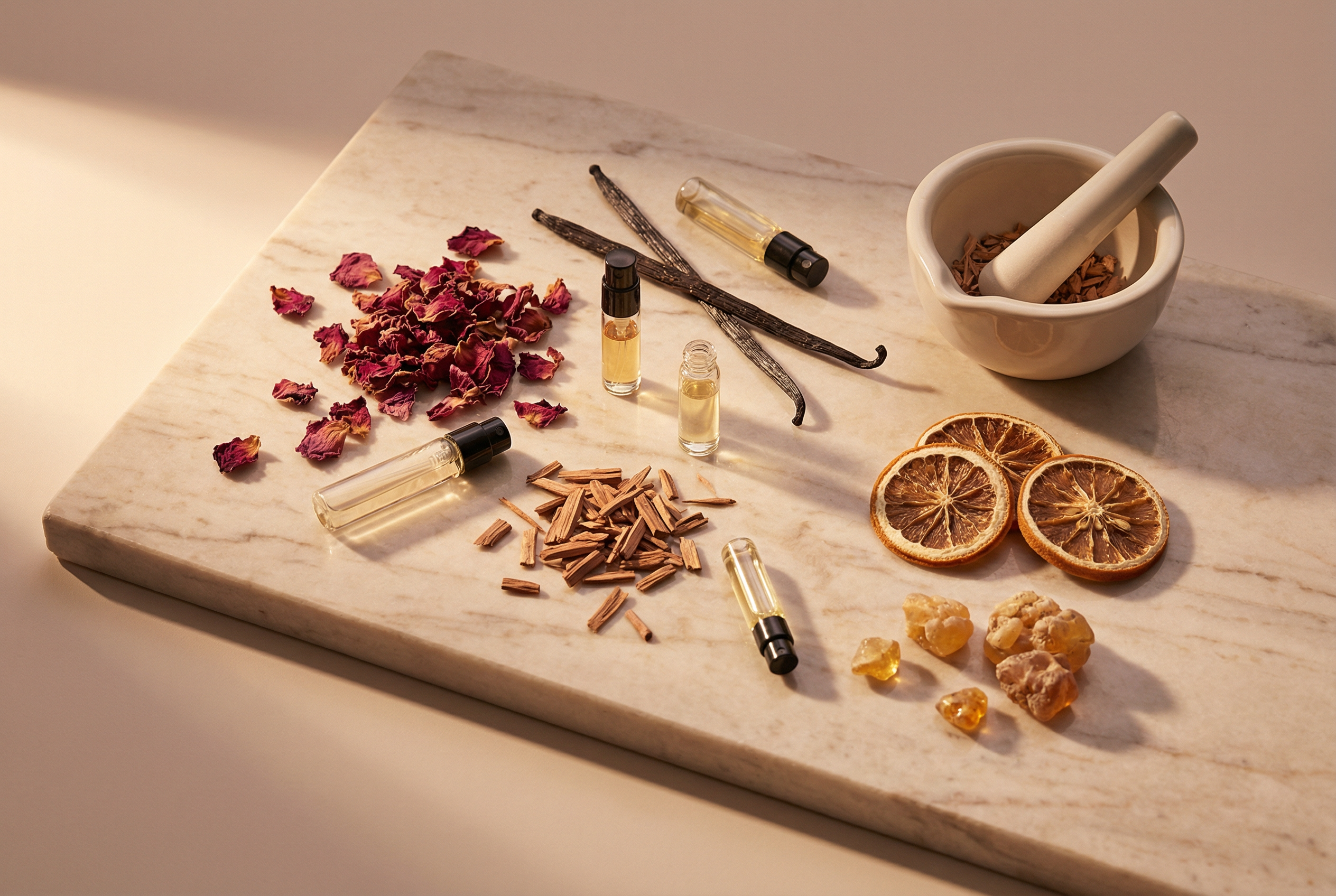
One of the most popular methods, diffusion involves dispersing essential oils into the air. An ultrasonic diffuser is the most common type, which uses water and electronic frequencies to create a fine mist. This is an excellent way to create a specific atmosphere in a room, whether you want to feel energised in the morning or relaxed in the evening. For a truly luxurious experience, consider blending oils to create your own signature scent, a concept explored further in our /article/fragrance-families-guide.
Topical Application
Essential oils can be applied directly to the skin, but it is crucial to dilute them with a carrier oil first. Carrier oils, such as jojoba, almond, or coconut oil, help to prevent skin irritation and ensure the essential oil is absorbed effectively. Our /article/hair-oils-complete-guide provides an in-depth look at various carrier oils that can be used on the hair and skin. Once diluted, you can massage the oil into your temples, wrists, or the soles of your feet.
Inhalation
For a quick and potent dose of aromatherapy, you can inhale essential oils directly from the bottle or by placing a few drops on a tissue or cotton ball. Another method is steam inhalation, where you add a few drops of oil to a bowl of hot water, cover your head with a towel, and breathe in the steam. This is particularly effective for respiratory issues, using oils like eucalyptus or peppermint.
Safety and Precautions
While essential oils are natural, they are also incredibly potent and must be used with care. Understanding the safety guidelines is paramount to enjoying the benefits of aromatherapy without adverse effects.
Dilution is Key
Never apply undiluted essential oils directly to the skin. As mentioned, a carrier oil is essential for safe topical application. A general rule of thumb is to use a 2% dilution, which translates to about 12 drops of essential oil per 30ml of carrier oil. For sensitive skin, a 1% dilution (6 drops per 30ml) is recommended.
Patch Testing
Before using a new essential oil, it is wise to perform a patch test. Apply a small amount of the diluted oil to a discreet area of skin, such as the inner elbow, and wait 24 hours to see if any irritation occurs.
Ingestion
It is not recommended to ingest essential oils unless under the guidance of a qualified clinical aromatherapist. Some oils can be toxic if swallowed and can cause significant internal damage.
Special Considerations
Certain individuals, including pregnant women, children, and those with medical conditions like epilepsy or high blood pressure, should exercise extra caution. Always consult with a healthcare professional before using essential oils if you fall into one of these categories.
Frequently Asked Questions
What is the difference between an essential oil and a fragrance oil?
Essential oils are natural plant extracts obtained through distillation or cold pressing, capturing the plant's therapeutic properties. Fragrance oils are synthetic, lab-created scents that lack the therapeutic benefits of essential oils.
Can I use essential oils on my pets?
Use extreme caution with essential oils around pets, as many are toxic to them. Always consult a veterinarian with knowledge of essential oils before use.
How should I store my essential oils?
Store essential oils in a cool, dark place in their original dark glass bottles to protect them from heat, light, and oxygen. Proper storage ensures a shelf life of at least two to three years.
Can aromatherapy help with anxiety?
Studies suggest aromatherapy can be an effective complementary therapy for anxiety. Lavender, bergamot, and frankincense are known for their calming properties, and inhaling them can soothe the nervous system.
Are there any side effects to using essential oils?
Essential oils can cause side effects like skin irritation or respiratory issues. To minimize risks, always follow safety guidelines, including proper dilution and patch testing.