In the ever-evolving world of skincare, few ingredients have achieved the iconic status and scientific backing of retinoids. Hailed as the gold standard in dermatology for everything from acne to ageing, this family of vitamin A derivatives is a cornerstone of any results-driven skincare philosophy. Yet, with a vast array of options available, from gentle over-the-counter retinol serums to potent prescription-strength tretinoin, navigating the world of retinoids can feel overwhelming.
This comprehensive guide will demystify the science, explain the different types, and provide a practical roadmap for incorporating this transformative ingredient into your routine, ensuring you can harness its power safely and effectively for your most radiant skin.
What Are Retinoids?
At its core, a retinoid is a class of chemical compounds that are all related to vitamin A. When applied to the skin, they work on a cellular level to promote faster skin cell turnover and stimulate collagen production. This dual action is the secret to their remarkable efficacy in addressing a wide spectrum of skin concerns.
Initially developed as a treatment for acne in the early 1970s, dermatologists soon observed that patients using retinoids also experienced significant improvements in skin texture, a reduction in fine lines, and a more even complexion. This discovery catapulted retinoids into the anti-ageing hall of fame, where they have remained ever since, backed by decades of robust clinical research.
The Retinoid Family: Understanding the Key Players
Not all retinoids are created equal. Their strength and efficacy are determined by a conversion process that must occur within the skin to become the active form, retinoic acid. The closer a retinoid is to retinoic acid, the more potent and effective it is—but also the higher the potential for irritation. Understanding this hierarchy is key to selecting the right product for your skin.
Retinyl Esters (e.g., Retinyl Palmitate)
This is the mildest form of retinoid, often found in introductory products or for those with extremely sensitive skin. Retinyl esters require multiple conversions in the skin to become retinoic acid, making them much gentler but also less potent. They are a good starting point for prevention but may not deliver dramatic results for existing concerns.
Retinol
Retinol is the most popular and widely researched over-the-counter retinoid. It is two steps away from retinoic acid, offering a fantastic balance of efficacy and tolerability. It is an excellent choice for those new to retinoids or looking to address the first signs of ageing and mild texture irregularities.
Retinal (Retinaldehyde)
Retinal is the direct precursor to retinoic acid, meaning it requires only one conversion step in the skin. This makes it significantly more powerful and faster-acting than retinol. It is an ideal intermediate option for seasoned retinol users who want to elevate their results without moving to a prescription.
Tretinoin (Retinoic Acid)
Also known by brand names such as Retin-A, tretinoin is pure retinoic acid. It is the most potent and effective retinoid available and is obtainable only through a prescription. It is the gold standard for treating both acne and photoageing, delivering transformative results but requiring careful management due to its high potential for irritation.
Other Notable Retinoids
- Adapalene: Previously prescription-only, adapalene (brand name Differin) is now available over the counter in a 0.1% concentration. It is particularly effective for acne due to its targeted action on pores.
- Tazarotene: A powerful prescription retinoid that is highly effective for both acne and psoriasis, but also comes with a higher risk of irritation.
How Do Retinoids Work?
The magic of retinoids lies in their ability to communicate with skin cells, instructing them to behave in a healthier, more youthful manner. They achieve this through several key mechanisms:
- Accelerating Cell Turnover: Retinoids speed up the natural process of shedding dead skin cells and bringing fresh, new cells to the surface. This helps to unclog pores, refine skin texture, and fade hyperpigmentation.
- Stimulating Collagen Production: They work within the deeper layers of the skin to boost the production of collagen and elastin, the proteins responsible for skin's firmness and elasticity. This leads to a visible reduction in fine lines and wrinkles over time.
- Normalising Sebum Production: For those with acne-prone skin, retinoids help to regulate oil production, preventing the clogged pores that lead to breakouts.
A Practical Guide to Using Retinoids
Successfully integrating retinoids requires a thoughtful and patient approach. The mantra is always: start low and go slow.
Choosing the Right Retinoid for You
Selecting the appropriate retinoid depends on your skin type, concerns, and experience level. The table below provides a simple comparison to guide your choice.
| Retinoid Type | Strength | Availability | Best For |
|---|---|---|---|
| Retinyl Esters | Very Low | Over-the-Counter (OTC) | Very sensitive skin, preventative care |
| Retinol | Low to Medium | Over-the-Counter (OTC) | Beginners, fine lines, uneven texture |
| Retinal (Retinaldehyde) | Medium to High | Over-the-Counter (OTC) | Experienced users, faster results, acne |
| Adapalene | High | OTC (0.1%) / Rx | Acne-prone skin |
| Tretinoin | Very High | Prescription Only | Established ageing, significant acne, texture |
How to Introduce Retinoids to Your Skincare Routine
To minimise the initial adjustment period, known as 'retinization', follow these steps:
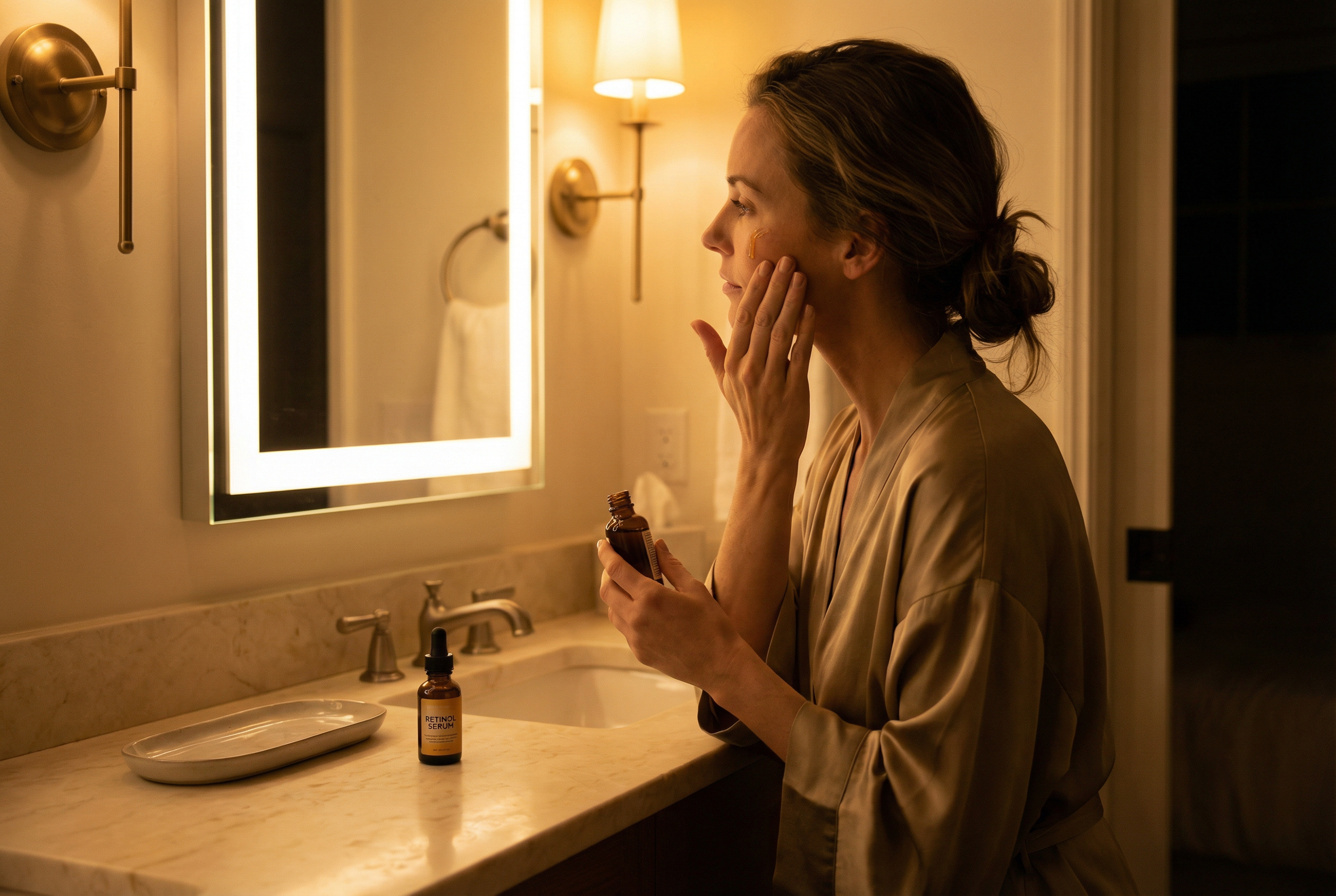
1. Apply at Night: Retinoids are best used in your evening routine as they can be degraded by sunlight.
2. Use a Pea-Sized Amount: A little goes a long way. Apply a small, pea-sized amount to your entire face, avoiding the delicate eye area and corners of the mouth.
3. Start Slowly: Begin by using your chosen retinoid just two or three times a week. As your skin builds tolerance, you can gradually increase the frequency. This is a core principle of strategies like skin cycling, which helps to balance active ingredients with recovery nights.
4. Buffer if Needed: If your skin is sensitive, try the "sandwich technique": apply a layer of moisturiser, let it absorb, apply the retinoid, and then apply another layer of moisturiser on top.
5. Always Use Sunscreen: This is non-negotiable. Retinoids make your skin more sensitive to the sun, so daily, broad-spectrum sun protection is essential to protect your results and prevent damage. Understanding the science of sunscreen is crucial for every retinoid user.
Potential Side Effects and How to Manage Them
It is common to experience some dryness, peeling, and redness when you first start using retinoids. This is a sign that the ingredient is working to resurface your skin. To manage this, simplify the rest of your routine. Pause the use of other potent actives, such as chemical exfoliants like AHAs and BHAs, until your skin has fully adjusted. Focus on hydration and barrier support with gentle cleansers and rich moisturisers.
Frequently Asked Questions (FAQ)
1. Can I use retinoids with vitamin C?
Yes, but it is best to separate them. Use your vitamin C serum in the morning to leverage its antioxidant properties against environmental damage, and use your retinoid at night.
2. How long does it take to see results from retinoids?
Consistency is key. While you may notice improvements in acne within a few weeks, changes in texture and fine lines typically take three to six months of consistent use to become apparent.
3. Are retinoids safe during pregnancy?
No. Oral retinoids are known to cause birth defects, and while the risk from topical application is low, they are not recommended for use during pregnancy or while breastfeeding. Always consult your doctor.
4. Can I use retinoids on my neck and décolletage?
Yes, but proceed with caution. The skin on the neck and chest is thinner and more sensitive. Use a gentler formula and apply it less frequently than you would on your face, always buffering with moisturiser.
5. What is the main difference between retinol and tretinoin?
The primary difference is strength and availability. Retinol is available over the counter and needs to be converted by the skin into its active form, making it gentler. Tretinoin is a prescription-only, pure active form (retinoic acid), making it much stronger and faster-acting.
By understanding the science and respecting the process, you can unlock the full potential of retinoids. Whether you are seeking to clear persistent acne, soften the signs of time, or simply achieve a smoother, more luminous complexion, there is a retinoid that can help you achieve your goals. It is a long-term commitment, but one that pays beautiful dividends.