The pursuit of a luminous, flawless complexion is a cornerstone of modern skincare. While physical scrubs have long been a bathroom cabinet staple, a more sophisticated and effective method has taken centre stage: chemical exfoliation. This technique, relying on the power of acids to renew the skin, offers a level of refinement that manual scrubbing simply cannot match. At the heart of this practice are two families of ingredients: Alpha-Hydroxy Acids (AHAs) and Beta-Hydroxy Acids (BHAs). Understanding their distinct properties is the key to unlocking their transformative potential and tailoring an exfoliation strategy that is perfect for your unique skin needs.
Chemical exfoliation works by dissolving the intercellular 'glue' that holds dead skin cells to the surface. This process of encouraging cellular turnover reveals the fresher, more radiant skin beneath, leading to a host of benefits. From diminishing the appearance of fine lines and hyperpigmentation to clarifying congested pores, the results are compelling. But with a myriad of products available, the choice between an AHA and a BHA can be daunting. This guide will demystify these powerhouse ingredients, helping you to navigate the world of chemical exfoliation with the confidence of a seasoned aesthetician.
What Are Alpha-Hydroxy Acids (AHAs)?
Alpha-Hydroxy Acids are a group of water-soluble acids, most famously derived from natural sources like sugar cane, milk, and fruit. Their primary function is to work on the uppermost layers of the skin, providing a surface-level exfoliation that addresses concerns related to texture and tone. By gently un-doing the bonds between dead skin cells, AHAs promote a smoother, more even complexion that reflects light beautifully.
There are several types of AHAs, each with a slightly different molecular size which affects its penetration and potency. The most common include:
The most common types of AHAs include glycolic acid, which has the smallest molecular size and penetrates most effectively, delivering impressive results for sun damage and signs of ageing. Lactic acid is a gentler alternative that also helps to hydrate the skin, making it an excellent choice for those with dry or sensitive skin. For the most sensitive skin types, mandelic acid, with its larger molecular size, offers a milder exfoliation and can also help to regulate sebum production.
AHAs are best suited for individuals with normal to dry, sun-damaged, or mature skin. Their ability to improve moisture content, reduce visible signs of sun damage, and soften the appearance of fine lines makes them an indispensable tool in an anti-ageing skincare arsenal.
What Are Beta-Hydroxy Acids (BHAs)?
Beta-Hydroxy Acids represent the other side of the chemical exfoliation coin. Unlike their water-soluble counterparts, BHAs are oil-soluble. This crucial difference allows them to penetrate deeper into the skin, travelling through the lipid layers to exfoliate inside the pore lining. This makes them exceptionally effective at addressing issues related to oiliness and congestion.
The most prevalent BHA in skincare is Salicylic Acid. Renowned for its anti-inflammatory and antibacterial properties, salicylic acid is a formidable opponent of acne and blemishes. It works by dissolving the mixture of sebum and dead skin cells that can lead to clogged pores, blackheads, and breakouts. This deep-cleaning action not only treats existing blemishes but also helps to prevent new ones from forming.
BHAs are the exfoliant of choice for those with oily, combination, or acne-prone skin. If your primary concerns are blackheads, whiteheads, enlarged pores, or persistent breakouts, a BHA-based product will be your most valuable ally. Its ability to calm redness and irritation also makes it a surprisingly gentle option for blemish-prone skin that is also sensitive.
The Key Differences: AHA vs. BHA
To choose the right acid is to understand its fundamental nature. While both AHAs and BHAs are brilliant exfoliants, their differences dictate their suitability for various skin types and concerns. The following table provides a clear comparison to guide your selection.
| Feature | Alpha-Hydroxy Acids (AHAs) | Beta-Hydroxy Acids (BHAs) |
|---|---|---|
| Solubility | Water-soluble | Oil-soluble |
| Area of Action | Works on the skin's surface | Penetrates deep into the pores |
| Best for Skin Type | Normal, dry, and sun-damaged skin | Oily, combination, and acne-prone skin |
| Primary Concerns | Fine lines, wrinkles, sun damage, uneven texture, dullness | Acne, blackheads, whiteheads, enlarged pores, excess oil |
| Examples | Glycolic Acid, Lactic Acid, Mandelic Acid | Salicylic Acid |
How to Choose the Right Exfoliant for Your Skin
Selecting the perfect chemical exfoliant is a personal journey that begins with a thorough understanding of your own skin. By following a considered approach, you can introduce these potent ingredients into your routine safely and effectively.
First, identify your skin type. Is it predominantly dry, oily, or a combination of the two? This will be your primary guide. Next, pinpoint your main concerns. Are you hoping to soften fine lines, or are you battling persistent blackheads? Your concerns will further narrow the choice.
Once you have a clearer idea of whether an AHA or BHA is more appropriate, it is crucial to start with a low concentration. This allows your skin to acclimatise to the ingredient and minimises the risk of irritation. A patch test, applying a small amount of the product to a discreet area of skin, is a non-negotiable step before full application.
How to Incorporate Chemical Exfoliants into Your Routine
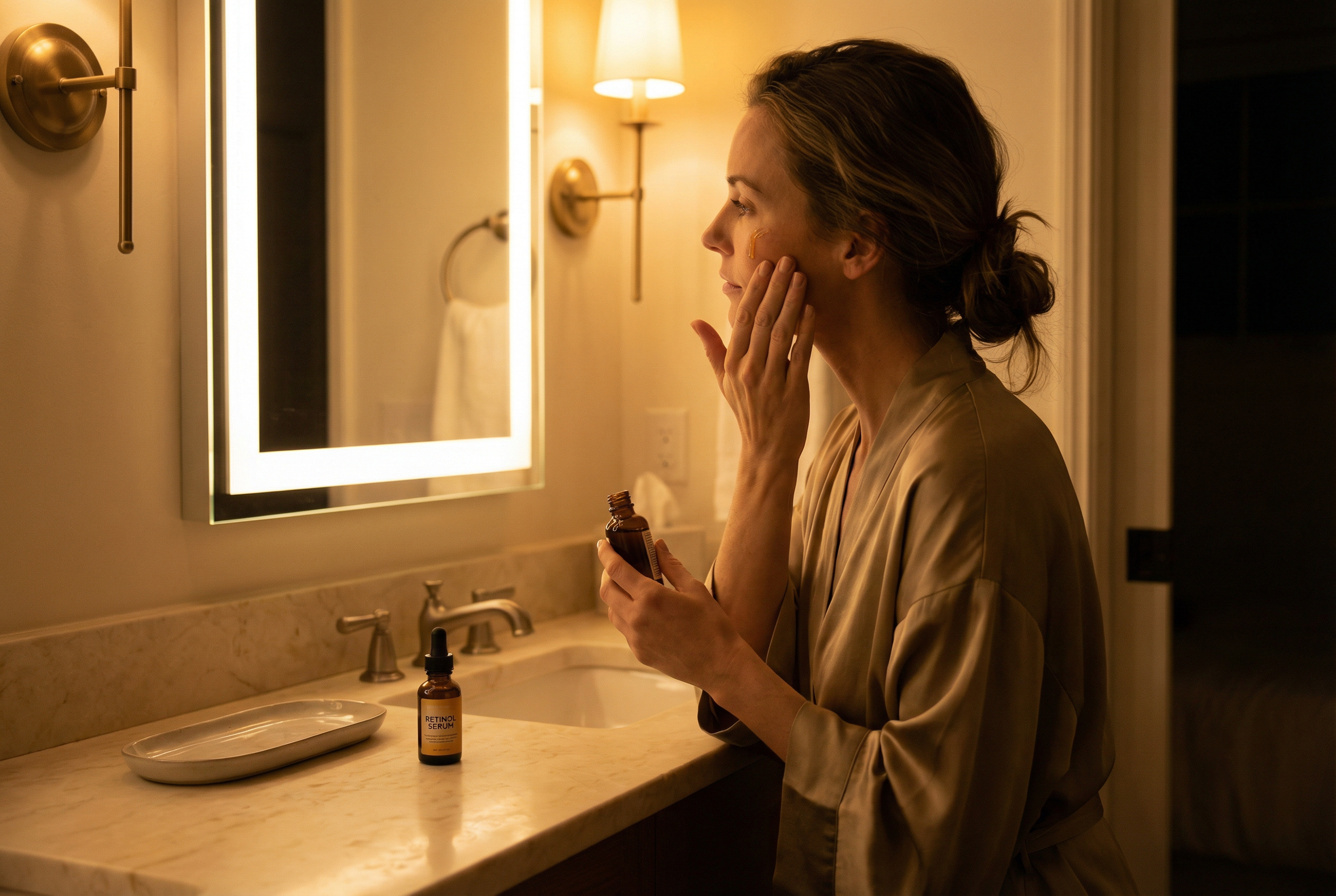
Introducing a chemical exfoliant into your skincare regimen should be a gradual process. Begin by using the product once or twice a week in the evening, after cleansing. As your skin builds tolerance, you may be able to increase the frequency. For those interested in a more structured approach, exploring a skin cycling routine can be an excellent way to integrate active ingredients without overwhelming the skin.
Apply a thin layer of the exfoliant to clean, dry skin, avoiding the delicate eye area. Allow it to absorb fully before following with a nourishing moisturiser to support your skin barrier. It is imperative to use a broad-spectrum sunscreen with a high SPF every single morning when using chemical exfoliants, as they can increase your skin's sensitivity to the sun.
For those also using other powerful active ingredients, such as retinoids, it is vital to use them at different times to avoid irritation. For a comprehensive overview on how to use retinoids effectively, our complete guide to retinoids offers expert advice.
Potential Side Effects and How to Avoid Them
While chemical exfoliants are generally safe, over-enthusiasm can lead to undesirable side effects such as redness, dryness, and peeling. This is often a sign of over-exfoliation, which can compromise the skin's natural protective barrier. A healthy skin barrier is essential for resilient, healthy-looking skin, a topic we explore in depth in our guide to understanding the skin barrier function.
To avoid these issues, listen to your skin. If you experience significant irritation, reduce the frequency of use or switch to a lower concentration. It is always better to be consistent with a gentle approach than to be aggressive and risk damaging your skin.
Frequently Asked Questions (FAQ)
Can I use AHAs and BHAs together?
Yes, it is possible to use both AHAs and BHAs in your routine, but it should be done with caution. You could alternate them on different nights, or use a product that is expertly formulated with both. However, for most people, choosing the one that best suits their skin type and concerns is sufficient.
How long does it take to see results?
With consistent use, you can expect to see initial improvements in skin texture and brightness within a few weeks. More significant results, such as a reduction in fine lines or a noticeable clearing of acne, may take two to three months to become apparent.
Are chemical exfoliants safe for sensitive skin?
Yes, but it is crucial to choose the right type and concentration. For sensitive skin, a gentle AHA like mandelic acid or a low-concentration BHA can be excellent options. Always perform a patch test and introduce the product slowly.
What should I not use with AHAs and BHAs?
To avoid irritation, it is generally advised not to use AHAs and BHAs in the same application as other potent active ingredients like retinoids or high-concentration vitamin C serums. It is best to alternate their use, for example, using a vitamin C serum in the morning and your chemical exfoliant at night.