The world of fragrance is a captivating realm of sensory exploration, a personal statement expressed through scent. Yet, for many, the terminology itself can be as complex as a master perfumer’s formula. Understanding the language of scent is the first step toward curating a truly personal and effective perfume wardrobe. At the heart of this language lies the concept of fragrance concentration, a factor that dictates not only the intensity and longevity of a scent but also its character and value. This guide will demystify the differences between Eau de Cologne, Eau de Toilette, Eau de Parfum, and Parfum, empowering you to make informed choices that align with your preferences, lifestyle, and budget.
The Spectrum of Scent: A Detailed Look at Concentrations
Fragrance concentration refers to the ratio of aromatic compounds—the essential oils and synthetic molecules that create the scent—to the solvent, which is typically a high-proof alcohol. This ratio is the primary determinant of a fragrance's performance, influencing its projection, sillage (the trail it leaves), and, most notably, its longevity on the skin. Let's explore the main categories, from the most delicate to the most potent.
Eau de Cologne (EDC)
Often misunderstood as a term for men's fragrance, Eau de Cologne is, in fact, a specific concentration. With a typical fragrance oil concentration of 2-4%, EDC is a light, refreshing, and often citrus-dominant formulation. Its origins trace back to the 18th century in Cologne, Germany, where it was created as a revitalising tonic. Due to its low concentration of aromatic compounds, an Eau de Cologne is the most ephemeral of the fragrance family, typically lasting for up to two hours. This makes it an excellent choice for a quick refresh on a warm day or for those who prefer a subtle, barely-there scent. Its fleeting nature also means it can be reapplied throughout the day without becoming overwhelming.
!A person applying perfume to their wrist
Eau de Toilette (EDT)
Moving up the concentration ladder, we find Eau de Toilette, one of the most popular and widely available fragrance types. With a concentration of 5-15% fragrance oil, an EDT offers a more pronounced presence than an EDC, lasting on the skin for approximately two to three hours. The term translates to "toilet water," a reference to the historical practice of using scented water for grooming and personal hygiene. An EDT is often a lighter, fresher interpretation of an Eau de Parfum, with a greater emphasis on the top and heart notes. This makes it an ideal choice for daytime wear, professional settings, or for those who enjoy the art of layering fragrances to create a unique scent profile. While it may require reapplication throughout the day to maintain its intensity, the versatility and relative affordability of EDTs make them a staple in many fragrance collections.
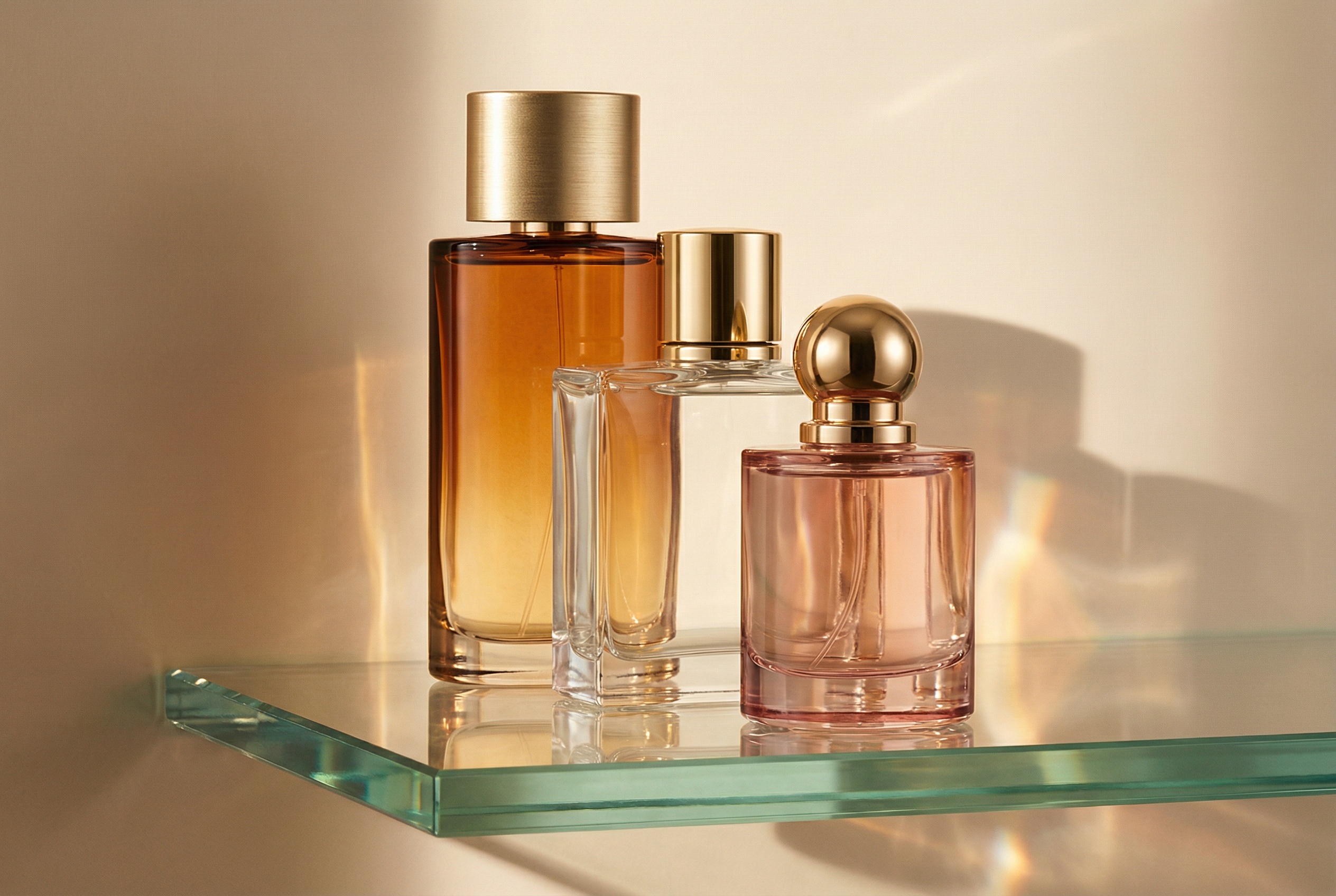
!A collection of elegant perfume bottles
Eau de Parfum (EDP)
Eau de Parfum represents a significant step up in both concentration and performance. With a fragrance oil content of 15-20%, an EDP delivers a richer, more complex, and longer-lasting scent experience. Typically, an Eau de Parfum will last for four to five hours, and sometimes longer, depending on the specific formulation and individual skin chemistry. The higher concentration allows the heart and base notes of the fragrance to develop more fully, resulting in a scent that evolves and deepens over time. This makes EDPs a popular choice for evening wear and special occasions, as well as for those who desire a signature scent with a noticeable presence. While they command a higher price point than their EDT counterparts, the increased longevity and intensity often mean that less product is needed per application, offering excellent value in the long run. The world of niche perfumery often focuses on this concentration, allowing for artistic and unique scent expressions.
!A luxurious perfume bottle with a golden cap
Parfum (Extrait de Parfum)
At the apex of the fragrance hierarchy sits Parfum, also known as Extrait de Parfum or pure perfume. This is the most concentrated and, consequently, the most expensive form of fragrance available. With a staggering 20-40% concentration of fragrance oils, a little goes a very long way. A single application of Parfum can last for six to eight hours, and in some cases, even longer. Due to its high concentration, Parfum is typically sold in smaller, more precious bottles and is often applied with a stopper rather than a spray. The scent experience of a Parfum is incredibly rich, deep, and nuanced, with a focus on the heart and base notes. It is a fragrance to be savoured, an intimate and luxurious experience for the wearer. While its price may be prohibitive for everyday use, a bottle of Parfum is a true investment piece for any serious fragrance aficionado, reserved for the most special of occasions.
!A woman enjoying the scent of her perfume
At a Glance: A Comparative Overview
To simplify the selection process, here is a direct comparison of the different fragrance concentrations:
| Concentration | Fragrance Oil % | Longevity (Approx.) | Best For |
|---|---|---|---|
| Eau de Cologne (EDC) | 2-4% | Up to 2 hours | A light, refreshing spritz on a hot day. |
| Eau de Toilette (EDT) | 5-15% | 2-3 hours | Everyday wear, professional settings, and layering. |
| Eau de Parfum (EDP) | 15-20% | 4-5 hours | Evening wear, special occasions, and signature scents. |
| Parfum (Extrait) | 20-40% | 6-8+ hours | The ultimate luxury, for intimate and long-lasting wear. |
How to Choose the Right Concentration for You
Selecting the perfect fragrance concentration is a personal decision that depends on a variety of factors. Here are some key considerations to guide your choice:
Longevity and Occasion
Consider how long you need your fragrance to last and the context in which you'll be wearing it. For a long day at the office or a special event, an EDP or even a Parfum might be the most practical choice, as they require minimal reapplication. For a casual weekend outing or a post-gym refresh, a lighter EDT or EDC may be more appropriate.
Sillage and Personal Preference
Think about the impression you want to make. Do you prefer a fragrance that announces your arrival, or one that is more subtle and intimate? If you enjoy a strong scent trail, an EDP or Parfum will provide the desired effect. If you prefer a more understated presence, an EDT or EDC will be a better fit.
Skin Chemistry
Your unique skin chemistry plays a significant role in how a fragrance develops and performs. Factors such as skin type (oily or dry), diet, and even hormones can affect the way a scent smells and how long it lasts. It's always advisable to test a fragrance on your skin before committing to a full bottle.
Budget
Finally, consider your budget. While it may be tempting to opt for the most concentrated and expensive option, it's important to choose a fragrance that you can comfortably afford to replenish. Remember that a higher concentration often means you'll use less product per application, so a more expensive bottle may last longer than a cheaper one.
The Art of Scent: A Final Word
Understanding fragrance concentrations is the key to navigating the vast and wonderful world of perfumery. By familiarising yourself with the differences between Eau de Cologne, Eau de Toilette, Eau de Parfum, and Parfum, you can make empowered choices that reflect your personal style and enhance your daily life. Whether you prefer the fleeting freshness of an EDC or the enduring elegance of a Parfum, there is a fragrance concentration out there that is perfect for you. The most important thing is to explore, experiment, and enjoy the transformative power of scent.
Frequently Asked Questions
Is Eau de Parfum better than Eau de Toilette?
Not necessarily. While an EDP has a higher concentration of fragrance oils and is therefore longer-lasting, an EDT can be a better choice for certain situations, such as daytime wear or in warmer weather. It ultimately comes down to personal preference and the desired effect.
Can I layer different fragrance concentrations?
Absolutely! Layering an EDT over a matching body lotion or an EDP can enhance the longevity and complexity of your scent. Experiment with different combinations to create a truly unique fragrance profile.
Why do some fragrances seem to last longer than others, even at the same concentration?
Longevity is influenced by a variety of factors, including the specific ingredients used in the fragrance, your skin chemistry, and even the climate. Fragrances with prominent base notes, such as woods and musks, tend to last longer than those with a high concentration of volatile citrus notes.
Is it true that you shouldn't rub your wrists together after applying perfume?
Yes, this is true. Rubbing your wrists together can crush the delicate fragrance molecules and alter the scent. Instead, gently dab or spray the fragrance onto your pulse points and allow it to air dry.
How should I store my fragrances to ensure they last?
To preserve the integrity of your fragrances, store them in a cool, dark place away from direct sunlight and extreme temperatures. A drawer or a closet is an ideal storage location.
The Science of Scent: Notes and Volatility
Every fragrance, regardless of its concentration, is a complex composition of individual aromatic ingredients, each with its own unique rate of evaporation. These ingredients are categorised into a three-tiered structure known as the fragrance pyramid: top notes, heart (or middle) notes, and base notes. The concentration of a fragrance has a profound impact on how this pyramid unfolds on the skin.
- Top Notes: These are the lightest and most volatile molecules in a fragrance, the first impression that greets your senses. Typically composed of citrus, herbal, and light fruity notes, they are designed to be bright and attention-grabbing. In lower concentrations like Eau de Cologne and Eau de Toilette, the top notes are often the star of the show, providing a burst of freshness that defines the initial character of the scent. However, they are fleeting, usually dissipating within the first 15 to 30 minutes of application.
- Heart Notes: As the top notes fade, the heart of the fragrance emerges. These notes form the main body of the scent and are typically composed of floral, green, or spicy accords. They are less volatile than the top notes, lasting for two to four hours on the skin. In an Eau de Parfum, the heart notes are given more space to develop and shine, creating a richer and more complex olfactory experience.
- Base Notes: The final and most enduring phase of a fragrance's evolution is the base. These are the heaviest and least volatile molecules, providing depth, richness, and longevity. Common base notes include woods, musks, resins, and vanilla. In a Parfum or Extrait de Parfum, the base notes are the foundation of the scent, lingering on the skin for many hours and creating a lasting impression. The high concentration of these less volatile compounds is what gives a Parfum its remarkable staying power.
The Influence of Concentration on Fragrance Families
The world of fragrance is often organised into families, broad classifications that group together scents with similar characteristics. The main families include Floral, Oriental, Woody, and Fresh. The concentration of a fragrance can significantly influence the character and expression of a scent within its family.
- Floral: A light, fresh Eau de Toilette might highlight the delicate, dewy aspects of a floral bouquet, while a rich, opulent Eau de Parfum could showcase the intoxicating, indolic facets of the same flowers.
- Oriental: In an EDT, the spicy and resinous notes of an oriental fragrance might be tempered by a brighter, more effervescent opening. In contrast, a Parfum concentration would amplify the warmth, depth, and sensuality of these notes, creating a truly captivating and mysterious aura.
- Woody: A woody EDT might present a crisp, clean, and almost transparent interpretation of cedarwood or sandalwood. An EDP or Parfum, on the other hand, would bring out the earthy, smoky, and resinous qualities of these woods, creating a more grounded and powerful scent.
- Fresh: This family, which includes citrus, green, and aquatic scents, is naturally suited to lighter concentrations. An EDC or EDT is the perfect vehicle for a refreshing and invigorating citrus burst. However, a skilled perfumer can create a surprisingly long-lasting fresh fragrance in an EDP concentration by using innovative synthetic molecules and clever blending techniques.
A Journey Through Time: The History of Fragrance Concentrations
The story of fragrance is as old as human civilisation itself, but the standardised concentrations we know today are a relatively modern invention. The evolution of fragrance concentrations is a fascinating tale that mirrors the advancements in chemistry, distillation techniques, and societal customs.
Ancient Origins: Perfumes of the Gods
In ancient Egypt, Mesopotamia, and the Indus Valley, fragrances were an integral part of religious rituals and daily life. These early perfumes were not the alcohol-based solutions we use today, but rather oil-based concoctions, resins, and incense. The aromatic materials were steeped in oil or fat to extract their scent, a process known as enfleurage. These fragrant oils were incredibly potent and long-lasting, akin to a modern-day Parfum. They were a symbol of wealth, status, and divine connection, reserved for the elite and for sacred ceremonies.
The Birth of Eau de Cologne
The 18th century marked a pivotal moment in the history of fragrance with the creation of Eau de Cologne. In 1709, an Italian perfumer named Giovanni Maria Farina, who had settled in Cologne, Germany, created a revolutionary new fragrance. Unlike the heavy, animalic scents that were popular at the time, Farina’s creation was a light, fresh, and invigorating blend of citrus and herbal notes. He called it "Aqua Mirabilis," or "miracle water." This was the birth of Eau de Cologne, a new type of fragrance that was diluted with grape spirit, making it lighter and more refreshing than the oil-based perfumes of the past. It was an instant success, beloved by royalty and high society across Europe.
The Rise of the Eau de Toilette and Eau de Parfum
The 19th century saw further advancements in fragrance technology, including the development of synthetic fragrance molecules. This made perfume more accessible to the middle classes and led to the creation of new fragrance concentrations. The term "Eau de Toilette" emerged to describe a lighter, more affordable version of a perfume, suitable for everyday use. As the 20th century progressed, the demand for longer-lasting and more luxurious fragrances grew, leading to the popularisation of the Eau de Parfum. This concentration offered a happy medium between the fleeting freshness of an EDT and the intense richness of a pure Parfum.
The Modern Fragrance Wardrobe
Today, we are fortunate to have a wide array of fragrance concentrations to choose from, each offering a unique scent experience. The modern fragrance wardrobe is a testament to the rich history and evolution of perfumery, a journey from the sacred oils of the ancient world to the sophisticated alcohol-based solutions of today. Understanding this history not only deepens our appreciation for the art of perfumery but also empowers us to make more informed and personal fragrance choices.
The Economics of Scent: A Value Comparison
When investing in a fragrance, it is crucial to look beyond the initial price tag and consider the overall value proposition. A higher upfront cost for a more concentrated fragrance can often translate to better long-term value. Let's break down the economics of scent.
Cost Per Application
While a bottle of Parfum is significantly more expensive than a bottle of Eau de Toilette, it is also far more concentrated. This means you need to apply much less of it to achieve the desired effect. A single spray of an EDP might be equivalent to three or four sprays of an EDT. When you calculate the cost per application, the more concentrated fragrance may actually be more economical in the long run. Before making a purchase, consider how frequently you will be using the fragrance and how many applications you are likely to get from a single bottle.
Longevity and Reapplication
Time is a valuable commodity, and the need for frequent reapplication can be a hidden cost. With a light Eau de Cologne, you may find yourself reapplying it every couple of hours to maintain the scent. An Eau de Parfum, on the other hand, can last for the entire workday or a long evening out, eliminating the need to carry the bottle with you for touch-ups. The convenience and peace of mind that come with a long-lasting fragrance are intangible benefits that add to its overall value.
The Quality of the Experience
Beyond the practical considerations of cost and longevity, there is the quality of the olfactory experience itself. A higher concentration allows for a more complex and nuanced scent profile, with a richer and more satisfying evolution on the skin. The artistry and craftsmanship that go into creating a high-quality Parfum are often reflected in the final product. For those who truly appreciate the art of perfumery, the experience of wearing a beautifully crafted, highly concentrated fragrance is a luxury worth investing in.
Mastering the Art of Application: Practical Tips for Every Concentration
The way you apply your fragrance can have a significant impact on its performance and the overall scent experience. Different concentrations benefit from different application techniques. Here are some expert tips to help you get the most out of your chosen fragrance.
The Light Touch: Applying Eau de Cologne and Eau de Toilette
Given their lighter nature, EDCs and EDTs are more forgiving and can be applied more liberally.
- The All-Over Spritz: For a refreshing and subtle aura, you can spritz an EDC or EDT into the air and walk through the mist. This will lightly scent your hair and clothing, creating a delicate and diffused trail.
- Pulse Point Power: For a more focused application, apply the fragrance to your pulse points: the wrists, the inner elbows, the base of the neck, and behind the knees. The warmth of these areas will help to gently diffuse the scent throughout the day.
- Hair and Clothing: A light mist of an EDT on your hair or scarf can be a lovely way to carry the scent with you. However, be mindful that some fragrances can stain delicate fabrics, so it's always best to test on an inconspicuous area first.
The Considered Approach: Applying Eau de Parfum
With its higher concentration, an EDP requires a more considered and precise application.
- Less is More: Start with a single spray. You can always add more if needed, but it's much harder to remove an overzealous application.
- Targeted Application: Focus on one or two pulse points. The base of the neck and the wrists are excellent choices. This will create a beautiful and noticeable scent bubble without overwhelming those around you.
- The Dab and Go: If you find a spray application too intense, try spraying the fragrance onto a cotton ball and then dabbing it onto your skin. This will give you more control over the amount of product you're using.
The Ritual of Luxury: Applying Parfum
A Parfum is a precious and potent elixir that should be applied with intention and care.
- The Stopper Technique: Most Parfums come with a glass stopper rather than a spray atomiser. To apply, gently touch the stopper to your pulse points. A single touch to the wrists and the décolletage is often all that is needed.
- An Intimate Experience: A Parfum is designed to be an intimate scent experience, for you and those closest to you to enjoy. It is not a fragrance that needs to shout its presence. Apply it sparingly and let its beauty unfold slowly on your skin.
- Preserve the Purity: To avoid contaminating your precious Parfum, never rub the stopper directly on your skin. Instead, touch it to your skin and then gently dab the area with your fingertip to distribute the scent.
Scent and Society: The Cultural Significance of Fragrance
Fragrance has always been more than just a pleasant smell; it is a powerful form of non-verbal communication, a cultural signifier, and a deeply personal form of self-expression. The way we use and perceive scent is shaped by a complex interplay of cultural norms, historical traditions, and personal associations.
Fragrance as a Status Symbol
Throughout history, fragrance has been a symbol of wealth, power, and social standing. In ancient Egypt, the rarest and most expensive scents were reserved for the pharaohs and the gods. In the court of Louis XIV, the "Sun King," perfume was an essential accessory for the aristocracy, used to mask the unpleasant odours of the time and to display one's refinement and sophistication. Even today, a rare and expensive perfume can be a powerful status symbol, a subtle signal of discerning taste and disposable income.
Scent and Spirituality
In many cultures, fragrance plays a central role in religious and spiritual practices. The burning of incense in temples and churches is a common ritual, used to purify the air, create a sacred atmosphere, and facilitate a connection with the divine. In Hinduism, the offering of fragrant flowers and incense is an integral part of puja, a form of worship. The use of scent in these contexts reminds us of the transcendent power of fragrance, its ability to elevate the spirit and transport us to a higher plane of consciousness.
The Scent of Identity
On a more personal level, fragrance is a powerful tool for shaping and expressing our identity. The scent we choose to wear can communicate a great deal about our personality, our mood, and our intentions. A light, fresh, citrusy scent might convey a sense of energy and optimism, while a rich, warm, oriental fragrance could suggest a more sensual and mysterious nature. Our choice of fragrance is a form of self-creation, a way of telling the world who we are without saying a word.
Fragrance and Memory
The connection between scent and memory is a profound and well-documented phenomenon. A particular fragrance can transport us back in time, evoking vivid memories and emotions. The smell of freshly baked bread might remind us of our childhood home, while the scent of a particular flower could bring back the memory of a first love. This deep connection between scent and memory is what makes fragrance such a powerful and personal experience. The fragrance we wear today will become the scent of memory for ourselves and for those around us in the years to come.
The Future of Fragrance: Innovation and Personalisation
The world of fragrance is in a constant state of evolution, driven by technological innovation, changing consumer preferences, and a growing desire for personalisation. As we look to the future, we can expect to see exciting new developments that will reshape the way we create, experience, and interact with scent.
The Rise of Sustainable and Ethical Perfumery
In recent years, there has been a growing awareness of the environmental and ethical impact of the fragrance industry. Consumers are increasingly demanding transparency and sustainability from the brands they support. In response, many fragrance houses are now focusing on ethically sourced ingredients, eco-friendly packaging, and cruelty-free practices. The future of fragrance is green, with a focus on renewable resources, biodegradable materials, and a commitment to protecting the planet.
The Power of Biotechnology
Biotechnology is revolutionising the way fragrances are created. Scientists are now able to produce rare and endangered fragrance ingredients in a laboratory setting, using fermentation and other innovative techniques. This not only protects vulnerable plant species but also allows for the creation of entirely new and unique scent molecules. The use of biotechnology is opening up a world of creative possibilities for perfumers, allowing them to explore a vast and uncharted olfactory landscape.
The Quest for Personalisation
In an increasingly crowded market, consumers are seeking out fragrances that are unique and personal to them. The future of fragrance is all about personalisation, with brands offering bespoke services that allow customers to create their own signature scent. From online questionnaires to in-store consultations, the process of creating a personalised fragrance is becoming more accessible and sophisticated. In the future, we may even see the use of AI and machine learning to create fragrances that are perfectly tailored to our individual preferences and body chemistry.
The Digital Scent Revolution
The digital world is the next frontier for fragrance. Tech companies are developing innovative new devices that can capture, create, and transmit scent in a digital format. Imagine being able to smell a fragrance before you buy it online, or sending a scented message to a loved one. The possibilities are endless. The digital scent revolution has the potential to transform the way we experience and interact with the world around us, creating a richer and more immersive sensory experience for all.