Have you ever caught a whiff of a particular scent and been instantly transported back to a long-forgotten childhood memory? Or perhaps you have a favourite perfume that never fails to lift your spirits on a gloomy day. The power of scent is undeniable, and its influence on our moods and memories is a fascinating area of study known as aromachology. This article delves into the psychology of scent, exploring how fragrance can shape our emotional landscape and unlock the deepest corners of our minds.
The Olfactory System: A Direct Pathway to Emotion and Memory
Our sense of smell, or olfaction, is unique among our senses. Unlike sight or sound, which are processed through various parts of the brain before reaching the emotional and memory centers, scent has a direct line. When we inhale a fragrance, the odour molecules travel up the nose to the olfactory bulb, which is part of the limbic system – the brain's emotional and memory hub. This direct connection to the amygdala (which processes emotion) and the hippocampus (which is responsible for memory formation) is why scents can trigger such immediate and powerful emotional responses and memories. [1]
This intimate relationship between scent and the brain has evolutionary roots. For our ancestors, the sense of smell was crucial for survival. It helped them to locate food, avoid predators, and recognise kin. This deep-seated connection has been preserved in our modern brains, and it explains why our sense of smell remains so powerfully linked to our most primal instincts and emotions.
The Power of Scent in Shaping Our Moods
The ability of fragrance to influence our mood is not just a matter of personal preference; it is a scientifically recognised phenomenon. Different scents can have a profound impact on our emotional state, a concept that is increasingly being harnessed in the world of wellness and marketing. For example, lavender is widely known for its calming properties, while citrus scents are often associated with feelings of energy and happiness. [2]
| Scent Family | Associated Moods |
|---|---|
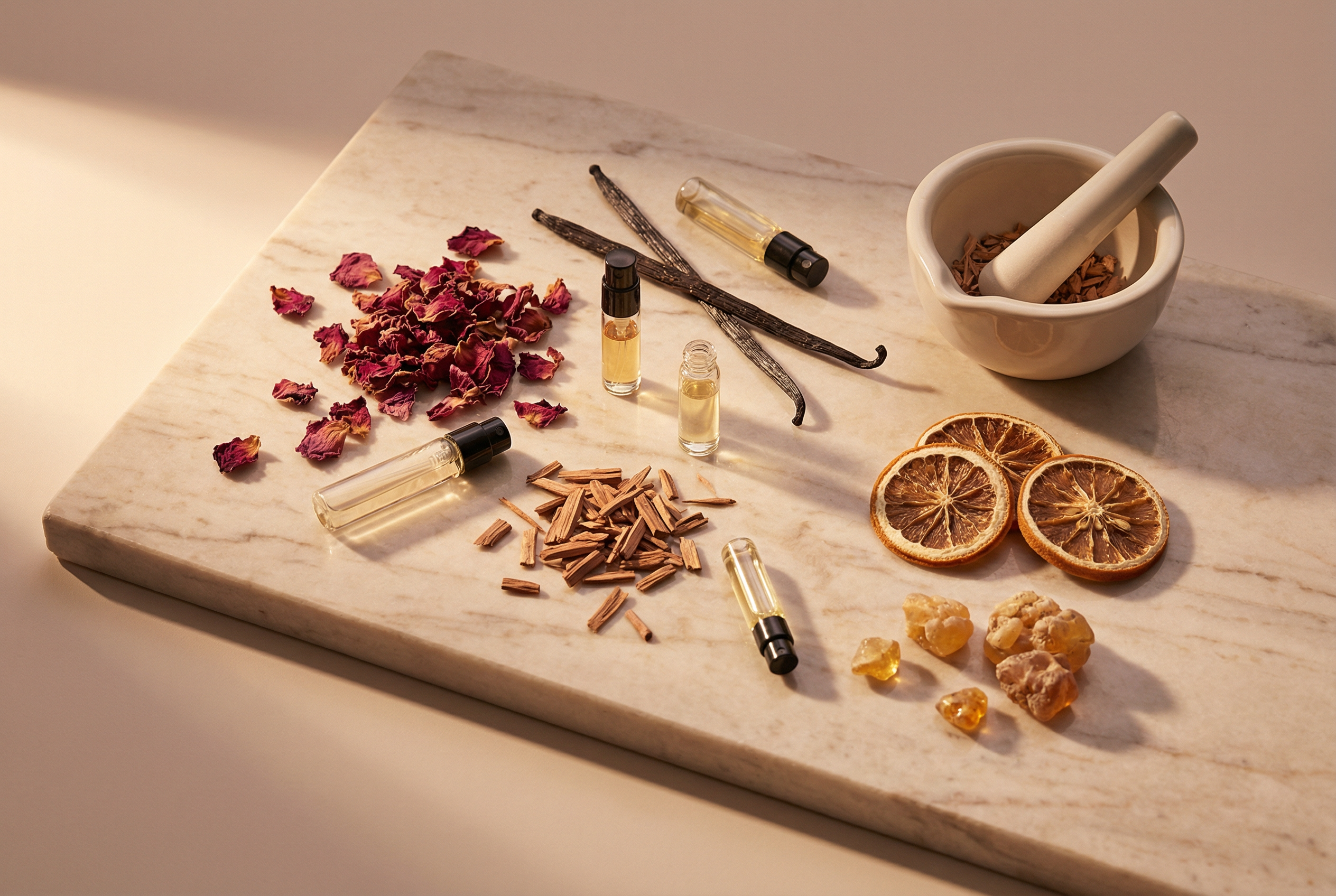
| Floral (e.g., Rose, Jasmine) | Romantic, comforting, calming |
| Citrus (e.g., Lemon, Bergamot) | Uplifting, energising, refreshing |
| Woody (e.g., Sandalwood, Cedarwood) | Grounding, stabilising, sophisticated |
| Oriental (e.g., Vanilla, Spice) | Warm, sensual, exotic |
It is important to note that our responses to scents are also highly personal and can be shaped by our individual experiences and cultural backgrounds. A scent that one person finds comforting might be unpleasant to another due to a negative past association. This is why the fragrance industry is so complex and why personal fragrance is such a powerful form of self-expression.
Scent and Memory: The Proustian Effect
The link between scent and memory is perhaps one of the most intriguing aspects of the psychology of fragrance. The
phenomenon of a scent triggering a vivid, long-forgotten memory is often referred to as the "Proustian effect," named after the author Marcel Proust, who famously described how the scent of a madeleine cake dipped in tea brought back a flood of childhood memories.
This powerful connection is due to the way our brains are wired. As mentioned earlier, the olfactory bulb is directly linked to the hippocampus, the brain's memory center. When we first encounter a new scent, the brain creates a link between the scent and the memory of that moment. When we encounter that scent again, the brain reactivates that link, bringing the memory and its associated emotions flooding back. [2]
Fragrance as a Tool for Wellness and Self-Care
Given the profound impact of scent on our mood and emotions, it is no surprise that fragrance is increasingly being used as a tool for wellness and self-care. The practice of using essential oils and other aromatic compounds to promote physical and psychological well-being is known as aromatherapy. While the scientific evidence for some of the more specific claims of aromatherapy is still emerging, there is no denying the power of scent to create a more pleasant and relaxing environment.
Creating a signature home scent or using a particular fragrance during meditation or yoga can help to create a sense of ritual and promote a state of calm and focus. Similarly, a spritz of an uplifting citrus scent in the morning can help to energise and invigorate, while a warm and sensual oriental fragrance can be the perfect accessory for a special evening out.
The Dark Side of Scent: Trauma and Aversion
Just as scent can evoke positive memories and emotions, it can also be a powerful trigger for negative ones. For individuals who have experienced trauma, a particular scent associated with that trauma can trigger intense flashbacks and feelings of anxiety. This is because the brain has created a powerful and negative association with that scent, and it can be very difficult to break.
In some cases, this can lead to a condition known as olfactory aversion, where an individual develops a strong dislike for a particular scent. This can be a very real and debilitating condition, and it highlights the importance of being mindful of the scents we wear and use in our homes, especially when we are around others.
Frequently Asked Questions
How can I find a signature scent?
Finding a signature scent is a very personal journey. The best way to start is by exploring different scent families to see what you are drawn to. Do you prefer fresh and clean scents, or warm and spicy ones? Once you have an idea of what you like, you can start to explore different perfumes within that family. Don't be afraid to ask for samples and to wear a scent for a full day before you commit to buying it. Your body chemistry can alter the way a fragrance smells, so it is important to see how it develops on your skin over time.
Can fragrance really improve my mood?
Yes, fragrance can have a very real and positive impact on your mood. The key is to find scents that you personally find uplifting and enjoyable. Experiment with different essential oils and home fragrances to see what works for you. You might find that a citrus scent helps you to feel more energised in the morning, while a lavender scent helps you to relax and unwind in the evening.
Are natural fragrances better than synthetic ones?
There is a lot of debate on this topic. Natural fragrances are derived from plant and animal sources, while synthetic fragrances are created in a laboratory. Both have their pros and cons. Natural fragrances can be more complex and nuanced, but they can also be more expensive and less consistent. Synthetic fragrances are often more affordable and have a longer shelf life, but some people find them to be less authentic. Ultimately, the choice between natural and synthetic fragrances is a matter of personal preference.
What is the difference between perfume, eau de toilette, and cologne?
The difference between these fragrance types lies in the concentration of perfume oil they contain. Perfume, also known as extrait de parfum, has the highest concentration, typically between 20-30%. This makes it the most expensive and longest-lasting option. Eau de parfum has a concentration of 15-20%, while eau de toilette has a concentration of 5-15%. Cologne, or eau de cologne, has the lowest concentration, typically between 2-4%. This makes it the most affordable and lightest option.
References
[1] The Connections Between Smell, Memory, and Health. Harvard Medicine Magazine.