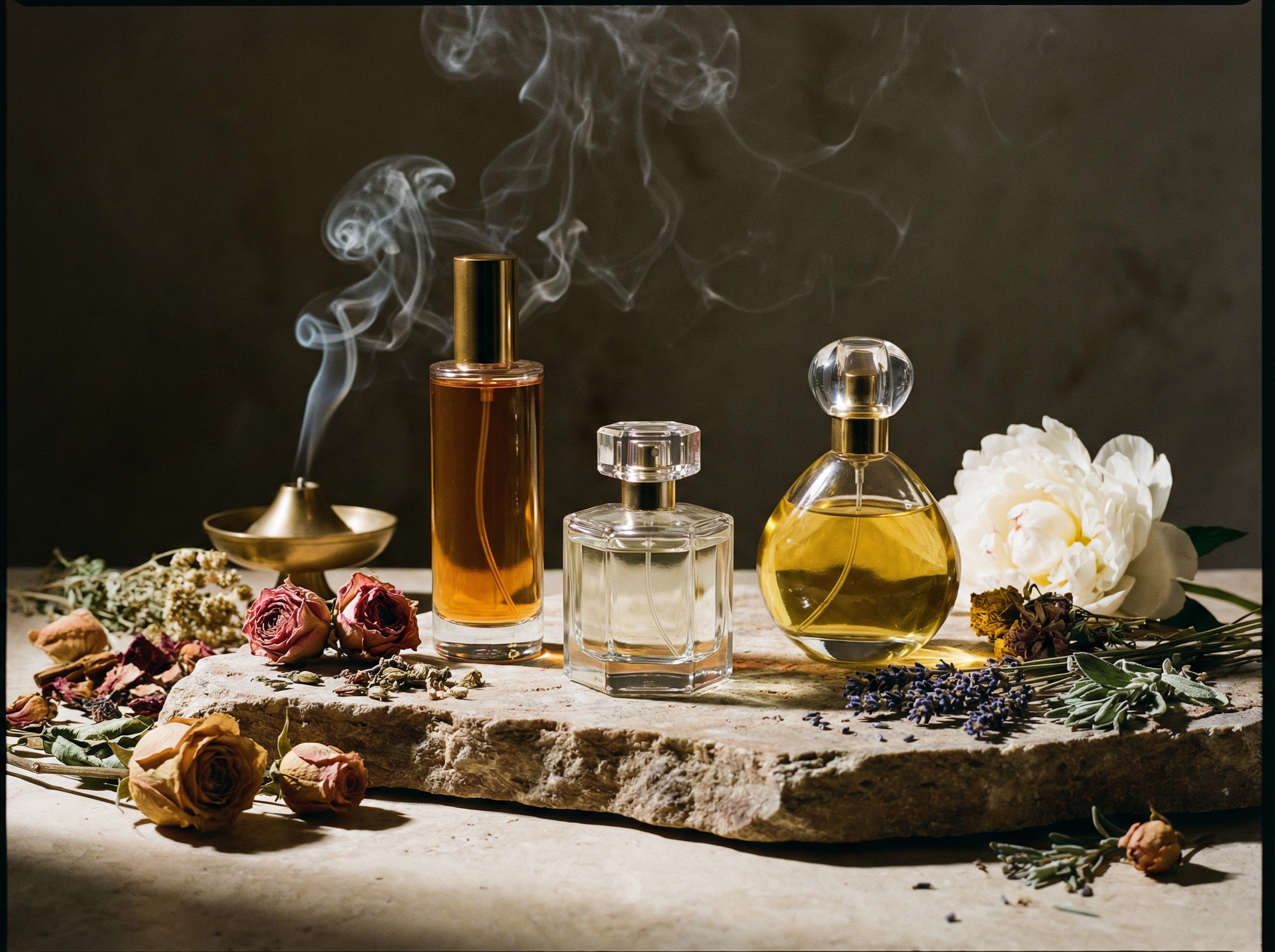
In the world of fragrance, a captivating debate swirls around the origins of scent: natural versus synthetic. For some, the allure of natural perfumes lies in their connection to the earth, their perceived purity, and their rich, complex aromas. For others, synthetic fragrances represent the pinnacle of scientific innovation, offering a kaleidoscope of scents that are both sustainable and consistent. This article delves into the heart of this olfactory discussion, exploring the nuances, artistry, and science that define both natural and synthetic perfumes. We will explore the different fragrance families and the role of top, heart, and base notes in creating a scent journey. We will navigate the complexities of scent creation, from the ancient art of distillation to the modern marvels of molecular synthesis, and uncover the truths behind the great fragrance debate.
The Olfactory Universe: What Defines Natural and Synthetic Perfumes?
At its core, the distinction between natural and synthetic perfumes is a tale of two origins. Natural perfumes are crafted from ingredients sourced directly from the natural world. These include essential oils, absolutes, resins, and tinctures extracted from flowers, leaves, spices, woods, and even animal secretions (though the latter is increasingly rare and ethically contentious). The methods of extraction are as old as perfumery itself, with techniques like steam distillation, solvent extraction, and expression used to capture the volatile aromatic compounds of these raw materials. The resulting scents are often rich, multifaceted, and imbued with the subtle complexities of their botanical origins.
In stark contrast, synthetic perfumes are born in the laboratory. These fragrances are composed of aroma molecules that have been created or modified through chemical processes. Some synthetic molecules are “nature-identical,” meaning they have the same chemical structure as their natural counterparts, while others are entirely novel, offering scents that have no equivalent in the natural world. The rise of synthetic perfumery in the late 19th century revolutionized the fragrance industry, providing perfumers with a vast and versatile palette of ingredients that were often more stable, consistent, and cost-effective than their natural counterparts.
The Art of the Blend: Scent Complexity and Creativity
The advent of synthetic ingredients dramatically expanded the creative horizons of perfumers. While natural perfumes are often lauded for their nuanced and evolving scent profiles, they are also subject to the whims of nature, with variations in harvest, climate, and geography influencing the final aroma. Synthetic ingredients, on the other hand, offer a level of precision and consistency that allows for the creation of highly specific and reproducible scent experiences.
This is not to say that one is inherently superior to the other. In fact, many of the world’s most iconic fragrances are a masterful blend of both natural and synthetic components. The legendary Chanel No. 5, for example, owes its revolutionary character to the use of aldehydes, a class of synthetic molecules that impart a sparkling, effervescent quality to the fragrance. Similarly, the groundbreaking use of vanillin, a synthetic version of the primary aroma compound in vanilla, has made the gourmand fragrance family one of the most popular in modern perfumery.
The ability to create entirely new scent sensations is another hallmark of synthetic perfumery, a topic we explore further in our guide to niche perfumery. Molecules like Calone, with its distinctive marine and ozonic notes, have given rise to a whole new category of aquatic fragrances, while the ethereal and musky aroma of Iso E Super has become a modern classic in its own right. Ultimately, the art of perfumery lies in the skillful blending of these diverse ingredients, with both natural and synthetic components playing a vital role in the creation of a truly memorable scent.
Longevity and Performance: The Staying Power of a Scent
One of the most significant differences between natural and synthetic perfumes lies in their performance, particularly their longevity. Synthetic fragrances are generally known for their impressive staying power, a result of the stability and low volatility of their molecular structure. These lab-created molecules are designed to evaporate slowly, allowing the scent to linger on the skin for hours on end. Additionally, synthetic fixatives are often used to anchor the fragrance, further enhancing its tenacity.
Natural perfumes, on the other hand, are often more ephemeral. The volatile nature of many natural ingredients, particularly citrus and floral notes, means they tend to evaporate more quickly. However, there are ways to extend the life of a natural fragrance. Applying it to well-moisturized skin, layering it with a matching body lotion, or choosing perfumes with a higher concentration of base notes (such as woods and resins) can all help to improve its longevity. It is also worth noting that the subtle and evolving nature of natural perfumes is part of their unique charm, with the scent interacting with the wearer's skin chemistry to create a truly personal fragrance experience, a concept we delve into in our article on the art of layering fragrances
| Note Type | Natural Examples | Synthetic Examples | Average Longevity |
|---|---|---|---|
| Citrus | Bergamot, Lemon, Grapefruit | Dihydromyrcenol, Citral | 1-2 hours |
| Floral | Rose, Jasmine, Ylang-Ylang | Hedione, Linalool | 3-5 hours |
| Woody | Sandalwood, Cedarwood, Vetiver | Iso E Super, Javanol | 6-8 hours |
| Resinous | Frankincense, Myrrh, Benzoin | Ambroxan, Cetalox | 8+ hours |
The Purity Debate: Safety, Allergies, and Transparency
The question of whether natural perfumes are inherently safer than their synthetic counterparts is a complex one, fraught with misconceptions. While the term “natural” often evokes a sense of purity and well-being, it is important to remember that many natural ingredients can be potent allergens. Oakmoss, for example, a common ingredient in classic chypre fragrances, is now heavily restricted by the International Fragrance Association (IFRA) due to its potential to cause skin sensitization.
Conversely, the word “synthetic” can conjure images of harsh chemicals, but in reality, many synthetic aroma molecules are created to be safer and more stable than their natural equivalents. For instance, synthetic musks were developed as an ethical and sustainable alternative to animal-derived musks, which were traditionally obtained from the musk deer. Furthermore, synthetic ingredients can be engineered to be free of the allergens that are often present in their natural counterparts.
Regardless of whether a fragrance is natural or synthetic, the importance of patch testing cannot be overstated. Applying a small amount of the perfume to a discreet area of skin, such as the inner elbow, and waiting 24 hours can help to identify any potential adverse reactions. For consumers seeking greater transparency, it is also advisable to look for brands that disclose their ingredients and adhere to the safety standards set by regulatory bodies like the IFRA, which provides guidelines for the safe use of fragrance ingredients.
Conscious Choices: Sustainability and Ethical Considerations
The debate between natural and synthetic perfumes also extends to the realm of sustainability and ethics. The sourcing of natural ingredients can have a significant environmental impact. The over-harvesting of certain plants, such as sandalwood and rosewood, has led to deforestation and the endangerment of these species. The cultivation of flowers for perfumery also requires vast amounts of land and water, further straining natural resources.
In this context, synthetic ingredients can offer a more sustainable alternative. The creation of aroma molecules in a laboratory setting often requires less water, land, and energy than the cultivation and extraction of natural ingredients. Furthermore, the development of synthetic alternatives to animal-derived ingredients, such as musk and civet, has been instrumental in promoting cruelty-free practices within the fragrance industry. The field of green chemistry is also playing an increasingly important role in the development of biodegradable and environmentally friendly synthetic ingredients, further blurring the lines between natural and synthetic in the pursuit of a more sustainable future for fragrance.
FAQs: Your Perfume Questions Answered
Are natural perfumes always better for you?
Not necessarily. While natural ingredients can offer therapeutic benefits, they can also be potent allergens. Synthetic ingredients, on the other hand, can be engineered to be free of allergens and are often more stable and consistent. The safety of a perfume depends on its specific ingredients and the individual's skin chemistry, rather than whether it is natural or synthetic.
Why are some perfumes so expensive?
The price of a perfume is determined by a variety of factors, including the rarity and cost of its ingredients, the complexity of its composition, and the branding and marketing of the fragrance. Natural ingredients, particularly those that are rare or difficult to extract, can be incredibly expensive, which is often reflected in the price of the final product.
How can I tell if a perfume is natural or synthetic?
It can be difficult to tell whether a perfume is natural or synthetic simply by smelling it. The best way to determine the composition of a fragrance is to check the ingredient list or the brand's website. Brands that use a high percentage of natural ingredients will often highlight this in their marketing materials. However, keep in mind that most modern perfumes contain a blend of both natural and synthetic ingredients.
Can I be allergic to natural perfumes?
Yes, you can be allergic to natural perfumes. Many natural ingredients, such as essential oils and absolutes, contain allergens that can cause skin irritation or other allergic reactions. If you have sensitive skin, it is always advisable to patch test a new fragrance before applying it liberally.