# Oud: The Complete Guide to Liquid Gold
>
Oud. The word itself whispers of ancient deserts, opulent palaces, and a scent so captivating it has been treasured for millennia. Often called “liquid gold,” oud is one of the most precious and sought-after ingredients in the world of fragrance. Its complex, rich, and intoxicating aroma has the power to transport us to another time and place, evoking a sense of mystery, luxury, and sensuality. But what exactly is this enigmatic substance, and why has it held such a powerful allure for centuries? In this comprehensive guide, we will delve into the world of oud, exploring its fascinating history, the intricate process of its creation, its diverse scent profiles, and its role in the art of niche perfumery. Whether you are a seasoned fragrance connoisseur or a curious newcomer, prepare to be captivated by the story of oud.
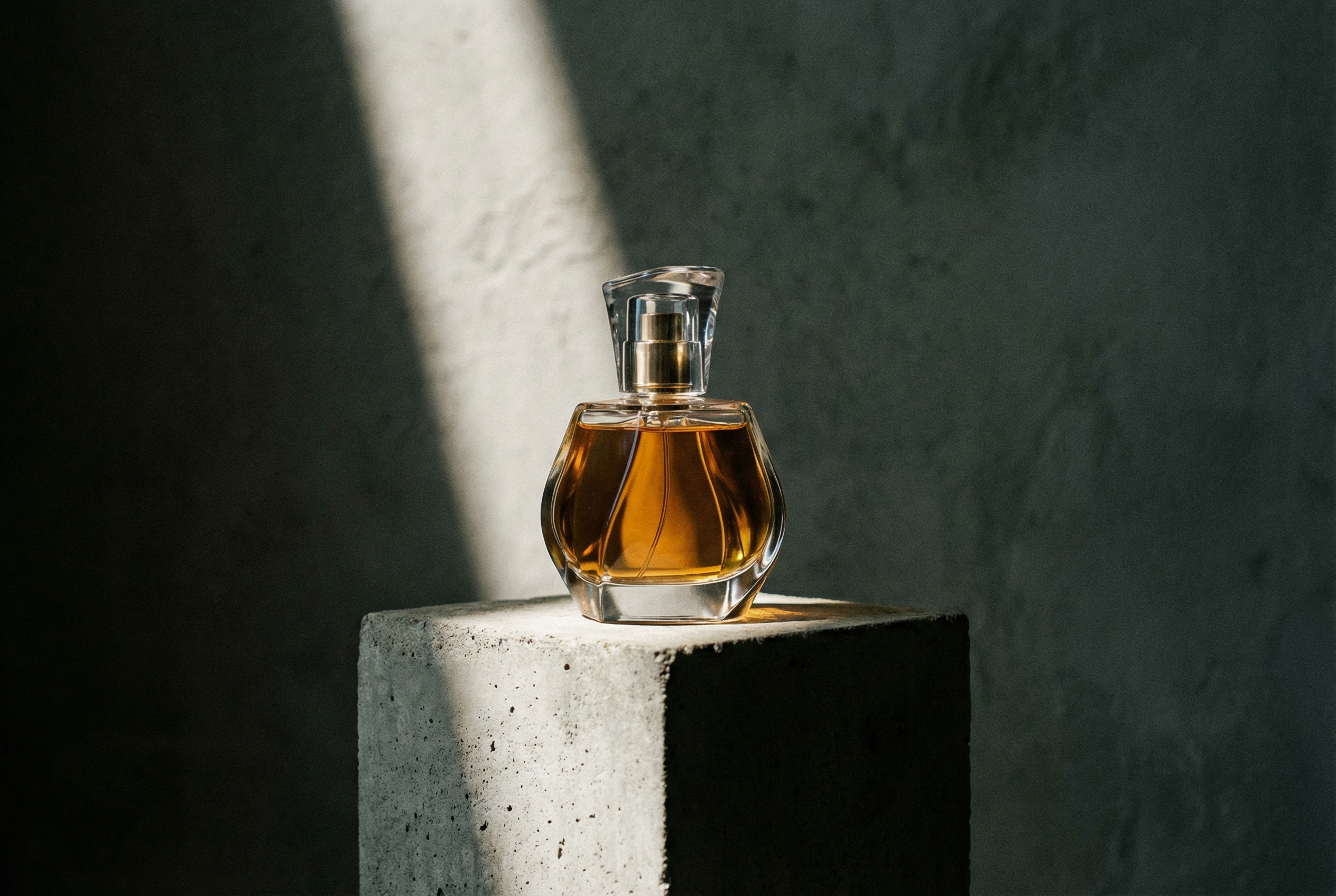
!A beautiful bottle of oud perfume, with a dark, rich liquid, sitting on a luxurious surface.
A Journey Through Time: The Rich History of Oud
The story of oud is as rich and complex as its fragrance. Its use is deeply woven into the cultural and religious tapestries of many civilizations, dating back thousands of years. From the sacred temples of the East to the opulent courts of kings and sultans, oud has been a symbol of wealth, spirituality, and prestige.
From Sacred Rituals to Royal Courts
The earliest recorded use of oud, also known as agarwood, can be traced back to ancient India, where it is mentioned in the Sanskrit Vedas, some of the oldest texts in human history. It was used in religious ceremonies and as a traditional medicine. The smoke from burning agarwood was believed to have purifying properties, capable of cleansing the body and spirit, and facilitating a connection with the divine. This spiritual significance is also found in other cultures; in Buddhism, it is used as an aid to meditation, while in the Islamic world, it is a scent of paradise, used to perfume mosques and homes, especially during the holy month of Ramadan.
The allure of oud soon spread beyond the spiritual realm. It became a coveted luxury item among the wealthy and powerful. In ancient China, it was more valuable than gold, and in the Middle East, it was a symbol of hospitality and honour. Guests were often welcomed with the scent of burning oud, a tradition that continues to this day in many parts of the region. The oil was also used to perfume clothing and hair, a practice that was particularly popular in the opulent courts of the Ottoman Empire.
The Rise of Oud in Modern Perfumery
While oud has been a cornerstone of Eastern perfumery for centuries, its journey into the Western fragrance world is a more recent phenomenon. For a long time, the strong, animalic scent of oud was considered too bold for the Western palate. However, as the world became more globalised and fragrance enthusiasts began to seek out more unique and complex scents, the allure of oud proved irresistible. The rise of niche perfumery in the late 20th and early 21st centuries played a significant role in introducing oud to a wider audience. Niche perfumers, who are not bound by the commercial constraints of mainstream fragrance houses, were free to experiment with bold and unconventional ingredients, and oud, with its rich history and complex scent profile, was the perfect candidate.
Today, oud is a celebrated ingredient in the world of luxury fragrance, used by both niche and mainstream brands. Its versatility allows it to be used in a wide range of compositions, from deep, smoky, and mysterious scents to lighter, more modern interpretations. The enduring popularity of oud is a testament to its timeless appeal, a scent that has captivated humanity for millennia and continues to do so with its intoxicating aroma.
!A piece of dark, resinous agarwood, the source of oud.
From Tree to Treasure: How Oud is Made
The creation of oud is a remarkable process, a testament to nature's ability to turn affliction into something truly precious. It is a journey that begins with a specific species of tree and a chance encounter with a particular type of mould, culminating in the extraction of one of the world's most valuable essential oils. Understanding this process is key to appreciating the rarity and complexity of oud.
The Mystical Aquilaria Tree
The source of all true oud is the Aquilaria tree, a large evergreen native to the rainforests of Southeast Asia. There are several species of Aquilaria, but only a few produce the prized resin. Under normal circumstances, the wood of the Aquilaria tree is pale, light, and odourless. The magic begins when the tree is injured, perhaps by a lightning strike, grazing animals, or insect infestation. This injury allows a specific type of parasitic mould, Phialophora parasitica, to infect the tree.
In response to this fungal attack, the Aquilaria tree produces a dark, dense, and highly aromatic resin as a defence mechanism. This resin slowly saturates the heartwood around the infected area over many years, sometimes even decades. This resin-impregnated wood is known as agarwood, or gaharu in Malay. The quality of the agarwood, and therefore the resulting oud, depends on a multitude of factors, including the species of the Aquilaria tree, the specific strain of mould, the age of the tree, and the duration of the resin-producing process. The finest agarwood is dark, heavy, and rich in resin, a true treasure hidden within the heart of the tree.
The Art of Distillation
Once the agarwood is harvested, the process of extracting the precious oud oil begins. This is a meticulous and time-honoured craft, often passed down through generations. The most common method of extraction is steam distillation. The agarwood is first ground into a powder, then soaked in water for a period of time to soften the wood and release the aromatic compounds. The soaked wood is then placed in a still, and steam is passed through it.
The steam captures the volatile aromatic molecules from the agarwood and carries them into a condenser, where the steam cools and turns back into a liquid. The precious oud oil, being less dense than water, floats on the surface and is carefully collected. The entire distillation process can take several days, and it requires a great deal of skill and experience to produce a high-quality oud oil. The yield of oil from the wood is incredibly low; it can take up to 20 kilograms of agarwood to produce just 12 millilitres of oud oil, which further contributes to its high price. The resulting oil is a complex and powerful liquid, a symphony of fragrance notes that tells the story of its creation.
!A traditional distillation apparatus used for extracting oud oil.
The Scent of Oud: A Symphony of Aromas
Describing the scent of oud is a challenge, as its complexity is one of its most defining characteristics. It is not a single, monolithic note, but rather a symphony of aromas that can vary dramatically depending on its origin and quality. However, there are some common threads that run through most oud fragrances, creating a scent profile that is instantly recognisable and utterly captivating.
Unraveling the Complex Scent Profile
At its core, oud is a woody fragrance, but to simply call it "woody" would be a gross understatement. The scent is deep, rich, and resinous, with a warmth that can be both comforting and sensual. Many people detect animalic notes, a certain "barnyard" quality that can be off-putting to some but is prized by connoisseurs for the depth and complexity it adds. This is often accompanied by leathery and smoky facets, evoking images of a crackling fire in a wood-panelled library. There can also be hints of sweetness, a subtle fruitiness or a touch of vanilla that balances the more intense notes. The overall impression is one of opulence and mystery, a fragrance that is both powerful and sophisticated.
Natural vs. Synthetic Oud: A Comparison
The immense popularity of oud, coupled with its rarity and high cost, has led to the development of synthetic alternatives. While some purists may scoff at the idea of synthetic oud, it plays an important role in the modern fragrance industry, making the scent of oud accessible to a wider audience and providing a more sustainable option. There are significant differences between natural and synthetic oud, both in terms of scent and performance.
| Feature | Natural Oud | Synthetic Oud |
|---|---|---|
| Origin | Derived from the resin of the Aquilaria tree | Created in a laboratory from a blend of aromatic chemicals |
| Scent Profile | Highly complex, with a wide range of nuances, including woody, animalic, smoky, and sweet notes. The scent can evolve significantly over time on the skin. | Tends to be more linear and less complex, often focusing on the woody and leathery aspects of oud. It may lack the animalic and spiritual depth of natural oud. |
| Cost | Extremely expensive, with prices reaching thousands of pounds per kilogram. | Significantly more affordable, making it accessible for use in a wider range of fragrances. |
| Sustainability | The harvesting of wild Aquilaria trees is unsustainable and has led to the species becoming endangered. Cultivated agarwood is a more sustainable option, but it is still a slow and resource-intensive process. | A much more sustainable option, as it does not rely on the harvesting of endangered trees. |
| Consistency | The scent of natural oud can vary significantly from batch to batch, depending on a wide range of factors. | Offers a high degree of consistency, allowing perfumers to create fragrances with a predictable scent profile. |
Both natural and synthetic oud have their place in the world of perfumery. While natural oud offers an unparalleled depth and complexity, synthetic oud provides a more affordable, sustainable, and consistent alternative. Many modern fragrances use a blend of both, combining the richness of natural oud with the stability of synthetics to create a scent that is both captivating and wearable. Understanding the different fragrance families can help you better appreciate how oud is used in various compositions.
A World of Oud: Exploring Different Varieties
Just as the terroir of a vineyard influences the character of a wine, the origin of an Aquilaria tree has a profound impact on the scent of the resulting oud. From the dense forests of Cambodia to the misty mountains of India, each region produces an oud with its own unique olfactory signature. Exploring these regional variations is a fascinating journey into the diverse world of "liquid gold."
Regional Differences and Their Scent Profiles
While there are many countries that produce agarwood, a few stand out for the quality and distinctiveness of their oud:
- Cambodian Oud: Often considered the king of ouds, Cambodian oud is prized for its sweet, fruity, and floral notes. It is less animalic than other varieties, with a smooth and well-balanced profile that makes it a popular choice for those new to oud. The scent is often described as being reminiscent of ripe plums and honey, with a subtle woody undertone.
- Indian Oud: Hailing from the Assam region of India, this is one of the most powerful and complex ouds. It is known for its strong animalic and "barnyard" notes, which can be challenging for some but are highly sought after by connoisseurs. Beneath the initial intensity, you will find a rich tapestry of woody, leathery, and spicy notes, creating a fragrance that is both bold and sophisticated.
- Thai Oud: Thai oud is known for its sweet and smoky character. It often has a distinct tobacco-like note, with hints of leather and a subtle sweetness that balances the smokiness. It is a versatile oud that can be used in a wide range of compositions, from dark and mysterious to warm and inviting.
- Vietnamese Oud: Vietnamese oud is prized for its spicy and slightly medicinal qualities. It has a clean and crisp scent, with notes of cinnamon and a hint of sweetness. It is a more subtle and refined oud, with a sophisticated and elegant character.
- Malaysian Oud: Malaysian oud is known for its earthy and woody profile. It often has a damp, forest-floor quality, with hints of moss and a subtle sweetness. It is a grounding and contemplative oud, with a deep and resonant character.
!A map of Southeast Asia, highlighting the key oud-producing regions.
Oud in the World of Perfumery
Oud's journey from a traditional Eastern ingredient to a global fragrance phenomenon has been nothing short of remarkable. Its powerful and complex character has captivated perfumers and fragrance lovers alike, securing its place as a treasured ingredient in the modern perfumer's palette. Understanding how oud is used in fragrance composition is key to appreciating its versatility and impact.
The Role of Oud in Fragrance Composition
In the world of perfumery, fragrances are often structured as a pyramid of notes: top, middle, and base. The top notes are the first scents you smell, the middle notes emerge as the top notes fade, and the base notes are the foundation of the fragrance, providing depth and longevity. Oud is almost always used as a base note. Its low volatility means that it evaporates slowly, allowing it to linger on the skin for hours, providing a rich and sensual foundation for the other notes in the composition.
But oud is more than just a long-lasting base note. It is also a powerful fixative, meaning that it helps to prolong the life of the other, more volatile notes in the fragrance. Its complex scent profile also allows it to act as a bridge between different fragrance families, connecting floral, spicy, and woody notes to create a harmonious and well-balanced composition. A touch of oud can add a touch of mystery to a floral fragrance, a hint of warmth to a citrus scent, or a touch of sensuality to a spicy blend.
Perfect Pairings: What to Blend with Oud
Oud's bold character means that it pairs well with other strong and assertive notes. Some of the most classic and successful pairings include:
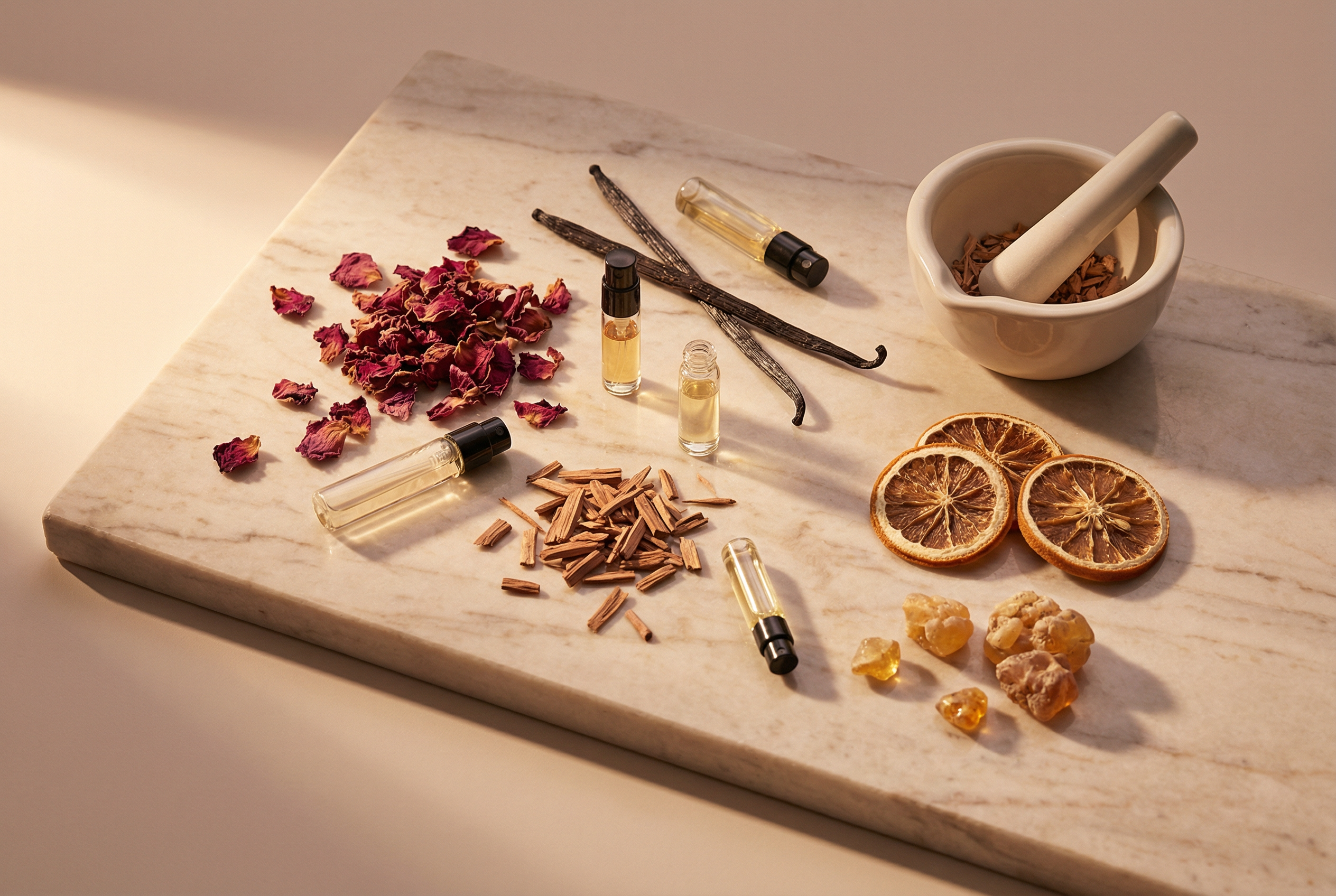
- Rose: The combination of oud and rose is a timeless classic, a marriage of two of the most treasured ingredients in perfumery. The sweetness of the rose provides a beautiful counterpoint to the dark, animalic notes of the oud, creating a fragrance that is both romantic and mysterious.
- Saffron: Saffron's warm, spicy, and slightly leathery aroma complements the woody and animalic facets of oud perfectly. Together, they create a fragrance that is opulent, exotic, and utterly captivating.
- Sandalwood: The creamy, milky sweetness of sandalwood provides a beautiful contrast to the sharp, resinous notes of oud. This pairing creates a fragrance that is both comforting and sophisticated, with a smooth and velvety texture.
- Amber: The warm, resinous, and slightly sweet scent of amber enhances the warmth and sensuality of oud. This combination creates a fragrance that is rich, inviting, and deeply comforting.
- Patchouli: The earthy, woody, and slightly sweet scent of patchouli reinforces the earthy and woody aspects of oud, creating a fragrance that is deep, dark, and mysterious.
How to Wear Oud: A Guide to Choosing and Applying Oud Fragrances
Wearing an oud fragrance is a statement. It is a declaration of confidence, sophistication, and a love for the finer things in life. However, the power and complexity of oud can also be intimidating. Choosing the right oud fragrance and applying it correctly is key to unlocking its full potential and ensuring that you wear the fragrance, rather than the other way around.
Finding Your Perfect Oud Scent
With the vast array of oud fragrances on the market, finding the one that is right for you can be a daunting task. Here are a few tips to guide you on your journey:
- Start with a lighter interpretation: If you are new to oud, it is best to start with a fragrance that uses oud as a supporting note rather than the star of the show. Look for fragrances that blend oud with familiar notes like rose, citrus, or vanilla. These fragrances will give you a taste of oud's character without overwhelming your senses.
- Consider the occasion: Oud fragrances can be very powerful, so it is important to consider the occasion when choosing which one to wear. A deep, smoky, and animalic oud might be perfect for a special evening out, but it might be too much for the office. For daytime wear, opt for a lighter, more modern interpretation of oud.
- Test on your skin: The way a fragrance smells on a paper blotter can be very different from how it smells on your skin. Your unique body chemistry will interact with the fragrance, amplifying certain notes and muting others. Always test a fragrance on your skin and let it develop for a few hours before making a decision.
Tips for a Lasting Impression
Once you have found your perfect oud fragrance, there are a few things you can do to ensure that it lasts all day and creates a beautiful sillage (the scent trail left by a fragrance):
- Apply to pulse points: The best places to apply fragrance are on your pulse points, where the blood vessels are closest to the skin. The warmth of these areas will help to diffuse the fragrance throughout the day. These include the wrists, the neck, behind the ears, and the inside of the elbows.
- Don't rub your wrists together: After applying fragrance to your wrists, resist the urge to rub them together. This can crush the delicate fragrance molecules and alter the scent.
- Layer your fragrance: For a truly immersive and long-lasting fragrance experience, consider layering your oud fragrance with other products from the same line, such as a body lotion or shower gel. This will help to create a multi-dimensional scent that will last for hours.
- A little goes a long way: Oud is a very powerful ingredient, so a little goes a long way. Start with a single spray and build up if necessary. It is always better to apply too little than too much.
The Future of Oud: Sustainability and Innovation
The enduring allure of oud has created a global demand that far outstrips its natural supply. This has put immense pressure on wild Aquilaria populations, leading to over-harvesting and illegal logging. The future of this precious ingredient now lies at a crossroads, balancing tradition with the urgent need for sustainability and innovation.
The Rarity of Oud and Conservation Efforts
The very process that creates oud—the infection of a mature Aquilaria tree—is a rare event in nature. It is estimated that fewer than 10% of wild Aquilaria trees produce the coveted resin. This natural scarcity, combined with soaring demand, has made the trees a target for poachers and has pushed many species to the brink of extinction. In response, the Convention on International Trade in Endangered Species of Wild Fauna and Flora (CITES) has listed all Aquilaria species as potentially threatened, regulating the international trade of agarwood to ensure its survival.
Conservation efforts are now focused on the cultivation of Aquilaria trees. Plantations have been established across Southeast Asia, where trees are grown specifically for agarwood production. Scientists are also developing techniques to artificially induce the resin-producing infection in cultivated trees, a method that promises a more reliable and sustainable supply. While cultivated oud may not yet possess the same complex, nuanced aroma as its wild counterpart, it represents a crucial step towards preserving this precious natural resource for future generations.
The Rise of Synthetic Oud
Innovation in the laboratory has also provided a vital lifeline for the fragrance world's oud obsession. The creation of synthetic oud has been a game-changer, offering a consistent, affordable, and entirely sustainable alternative to the natural material. Perfumers can now access a reliable palette of oud-like molecules to create fragrances that capture the spirit of oud without depleting natural resources.
These synthetic creations, often referred to as "oud accords," are masterfully blended to replicate different facets of the natural scent. Some focus on the smoky, leathery aspects, while others highlight the warm, ambery, and sweet dimensions. While they may not capture the full, intricate soul of a 100-year-old wild oud, they allow the magic of oud to be experienced by a much broader audience and play a critical role in the perfumer's art, as explored in our guide to fragrance notes explained. The future of oud in perfumery will likely be a harmonious blend of tradition and technology, where precious, sustainably sourced natural oud is used in the most exclusive creations, while high-quality synthetic accords bring its captivating aroma to the world.
Frequently Asked Questions
What is the difference between oud and agarwood?
Oud and agarwood are often used interchangeably, but they refer to different stages of the same process. Agarwood is the dark, resinous wood that forms in the heart of the Aquilaria tree after it has been infected with a specific type of mould. Oud is the precious essential oil that is extracted from the agarwood through distillation. So, agarwood is the raw material, and oud is the final product.
Why is oud so expensive?
The high price of oud is due to a combination of factors. Firstly, the natural process of agarwood formation is very rare, occurring in only a small percentage of wild Aquilaria trees. Secondly, the trees themselves are now endangered due to over-harvesting. Thirdly, the distillation process is incredibly time-consuming and yields a very small amount of oil. It can take tens of kilograms of agarwood to produce just a few millilitres of pure oud oil, making it one of the most valuable raw materials in the world.
Does oud smell good on everyone?
Like any fragrance, how oud smells can vary significantly from person to person. Your unique body chemistry plays a crucial role in how a fragrance develops on your skin. The animalic and medicinal notes that are characteristic of some ouds can be more pronounced on some people than on others. It is always recommended to test an oud fragrance on your skin before purchasing to see how it interacts with your natural scent.
How can I tell if an oud fragrance is high quality?
A high-quality oud fragrance will have a complex and evolving scent profile. It should not smell flat or one-dimensional. You should be able to detect a variety of notes, from woody and smoky to sweet and spicy. The fragrance should also have excellent longevity, lasting for many hours on the skin. A reputable brand and a higher price point are often, but not always, indicators of quality.
Is oud a masculine or feminine fragrance?
Traditionally, oud has been worn by both men and women in the Middle East for centuries. In Western perfumery, it is often marketed towards men due to its deep, woody, and smoky character. However, the beauty of fragrance is that it is entirely subjective. There are many oud fragrances that are blended with floral and sweet notes, making them perfectly suitable for women. Ultimately, the most important thing is to wear what you love and what makes you feel confident.
What is the best way to store an oud fragrance?
To preserve the integrity of your oud fragrance, it is important to store it correctly. Keep it in a cool, dark place, away from direct sunlight and extreme temperatures. The bathroom is generally not a good place to store fragrances, as the heat and humidity can cause the delicate aromatic molecules to break down. A drawer or a cupboard in a bedroom is an ideal storage location.
Can I layer oud with other fragrances?
Yes, layering fragrances is a wonderful way to create a unique and personalised scent. Oud, with its rich and complex character, can be a great base for layering. Try pairing it with a simple floral or citrus scent to add a touch of warmth and mystery. The key is to experiment and have fun. There are no rules when it comes to fragrance, so don't be afraid to get creative.
The Enduring Legacy of Oud
From the sacred rituals of ancient civilisations to the gleaming perfume halls of modern-day department stores, the allure of oud has remained undiminished for millennia. It is a fragrance that tells a story of rarity, transformation, and timeless luxury. Its complex and captivating aroma continues to enchant and inspire, a testament to the enduring power of nature's most precious secrets. Whether you are drawn to its deep, smoky mystery or its warm, sensual embrace, the world of oud offers a rich and rewarding journey for any fragrance enthusiast. As you explore the diverse and fascinating landscape of this liquid gold, you are not just discovering a scent, but connecting with a legacy that has been treasured for centuries and will undoubtedly continue to captivate for centuries to come.