Just as we curate our wardrobes to reflect the changing seasons, so too should we consider our choice of fragrance. The scent we wear is an invisible yet powerful accessory, capable of evoking memories, influencing our mood, and completing our personal aesthetic. A fragrance that feels light and breezy on a summer day can feel out of place in the depths of winter, while a rich, spicy aroma might be overwhelming in high heat. This guide will explore the art of seasonal scenting, helping you to build a versatile fragrance wardrobe that complements every time of year.
The Art of Scent Seasonality
The practice of rotating fragrances with the seasons is not merely a matter of preference; it is also rooted in the science of how scent interacts with our bodies and the environment. Temperature plays a significant role in how a fragrance develops and projects. Warmer weather intensifies fragrance notes, causing them to bloom and diffuse more readily. In contrast, cooler temperatures can mute a scent, making it less perceptible. By selecting fragrances with notes that harmonise with the climate, we can ensure our chosen scent remains balanced and beautiful throughout the day.
Spring: A Symphony of Fresh and Floral Notes
Spring is a time of renewal and rebirth, and the fragrances that best capture this spirit are fresh, clean, and floral. As the world awakens from its winter slumber, scents that are light and uplifting feel most appropriate. Think of a walk through a blossoming garden or the crisp air after a spring shower.
Key fragrance notes for spring include:
- Floral: Peony, lily of the valley, neroli, and rose
- Green: Galbanum, violet leaf, and tea
- Citrus: Bergamot, lemon, and petitgrain
These notes combine to create fragrances that are both elegant and invigorating, perfectly mirroring the optimism of the season. For a classic spring scent, consider a fragrance that leads with a bright citrus note before revealing a heart of delicate white florals. For a more modern interpretation, look for scents that incorporate green notes for a crisp, natural feel.
Summer: Embracing Light and Luminous Scents
Summer calls for fragrances that are light, refreshing, and transportive. When the temperature rises, heavy, opulent scents can become cloying. Instead, opt for fragrances that evoke the feeling of a sun-drenched beach or a cool, gentle breeze. Aquatic, citrus, and fruity notes are all excellent choices for the summer months.
Key fragrance notes for summer include:
- Aquatic: Sea breeze and calone
- Citrus: Grapefruit and orange blossom
- Fruity: Mango and melon
- Soft Florals: Jasmine and ylang-ylang
These notes create fragrances that are both uplifting and cooling, providing a welcome respite from the summer heat. A well-chosen summer scent should be a subtle whisper, not a shout. Consider a light Eau de Toilette or a body mist for a less intense application. For more on the different fragrance concentrations, see our guide to understanding perfume strengths.
Autumn: A Tapestry of Warm and Spicy Aromas
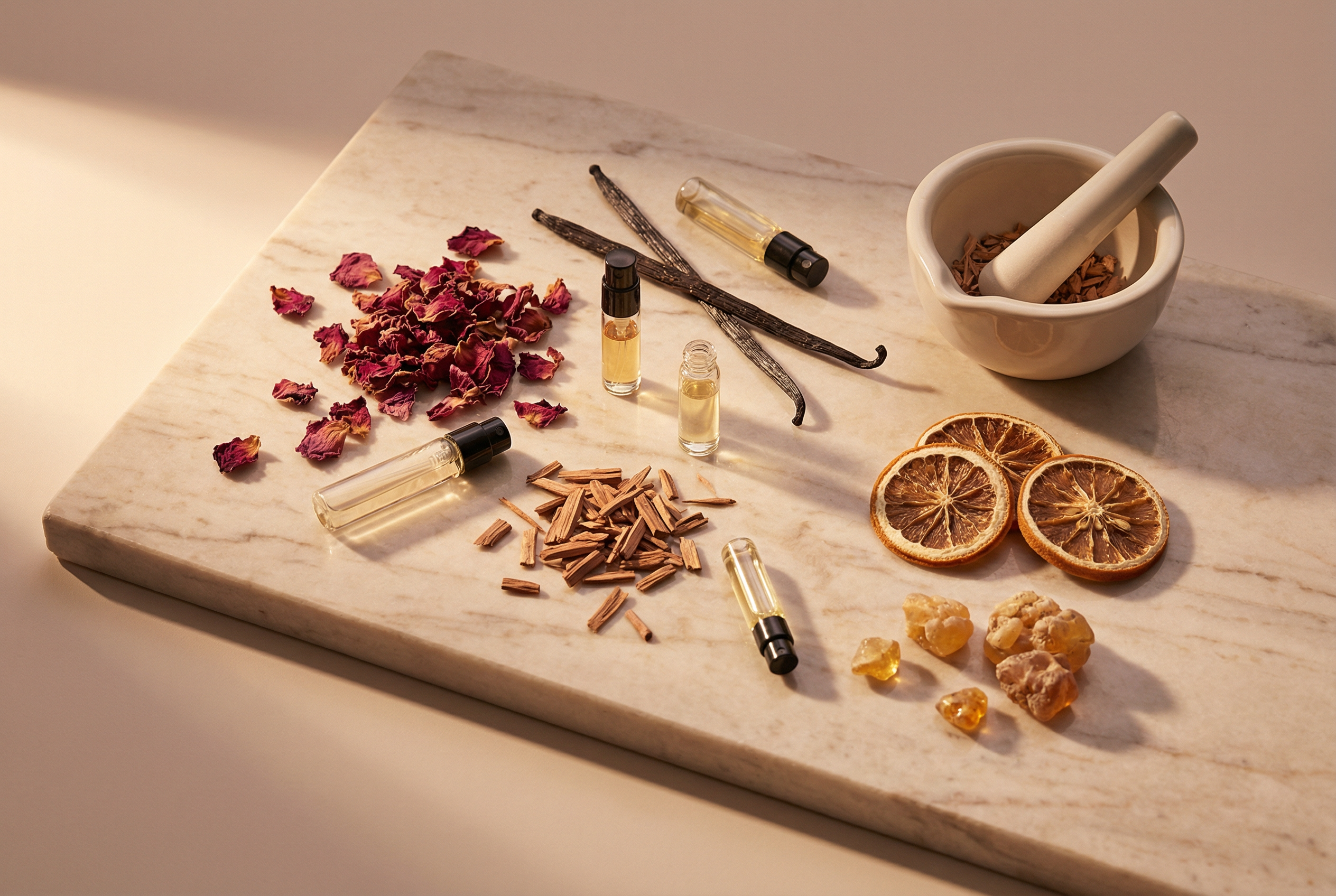
As the leaves begin to turn and the air grows crisp, our fragrance preferences shift towards scents that are warm, comforting, and rich. Autumn is the perfect time to embrace gourmand, woody, and spicy notes that evoke the feeling of a cosy evening by the fire. Think of the scent of freshly baked treats, the earthy aroma of a forest floor, or the warmth of exotic spices.
Key fragrance notes for autumn include:
- Spicy: Cinnamon, clove, and cardamom
- Gourmand: Vanilla, tonka bean, and coffee
- Woody: Cedar, sandalwood, and patchouli
These notes combine to create fragrances that are both sensual and sophisticated, perfectly complementing the rich colours and textures of the season. An autumn fragrance should have a certain depth and complexity, with a scent that evolves and reveals different facets throughout the day.
Winter: The Allure of Rich and Resinous Fragrances
Winter is a time for fragrances that are bold, opulent, and long-lasting. In the cold, our skin does not project scent as effectively, so this is the season to indulge in richer, more intense aromas. Resinous, deep woods, and animalic notes all shine in the winter, creating a sense of warmth and mystery.
Key fragrance notes for winter include:
- Resinous: Incense, myrrh, and labdanum
- Deep Woods: Oud and vetiver
- Animalic: Musk, leather, and ambergris
These notes create fragrances that are both powerful and alluring, making a statement without being overwhelming. A winter fragrance should be a source of comfort and luxury, a scent that envelops you in a warm embrace. To learn more about how to make your fragrance last, read our tips on making your perfume last longer.
Fragrance Wardrobe Essentials
| Season | Fragrance Family | Key Notes | Recommended For |
|---|---|---|---|
| Spring | Floral, Green, Citrus | Peony, galbanum, bergamot | Daytime wear, outdoor activities |
| Summer | Citrus, Aquatic, Fruity | Grapefruit, sea breeze, mango | Hot weather, casual occasions |
| Autumn | Gourmand, Woody, Spicy | Vanilla, sandalwood, cinnamon | Evening wear, special events |
| Winter | Resinous, Woody, Animalic | Incense, oud, musk | Cold weather, formal occasions |
Frequently Asked Questions
How do I make my fragrance last longer in different seasons?
In the warmer months, apply fragrance to pulse points such as the wrists, neck, and behind the ears. The heat from these areas will help to diffuse the scent. In the colder months, consider layering your fragrance over a matching body lotion or oil to help it last longer on the skin.
Can I wear a "winter" fragrance in the summer?
While there are no strict rules when it comes to fragrance, it is generally best to avoid wearing heavy, spicy scents in high heat as they can become overwhelming. However, if you love a particular fragrance, you can always try a lighter application or save it for cooler summer evenings.
What is the difference between Eau de Parfum and Eau de Toilette?
The main difference between Eau de Parfum (EDP) and Eau de Toilette (EDT) is the concentration of fragrance oil. EDPs typically contain 15-20% fragrance oil, while EDTs contain 5-15%. This means that EDPs are generally more intense and longer-lasting than EDTs.
How should I store my fragrances to protect them from seasonal changes?
To protect your fragrances from the damaging effects of heat, light, and humidity, it is best to store them in a cool, dark place, such as a drawer or a cupboard. Avoid storing them in the bathroom, as the fluctuating temperature and humidity can cause the fragrance to degrade over time.