In a world increasingly questioning traditional binaries, a quiet but profound revolution is taking place within the fragrance industry. The long-established, rigid walls that once separated ‘masculine’ and ‘feminine’ scents are not just being challenged; they are actively being dismantled. This has paved the way for a more fluid, personal, and authentic approach to perfumery, giving rise to the era of the unisex fragrance. This movement, which champions individuality and the power of self-expression over outdated and often arbitrary gender norms, is far more than a fleeting trend. It signifies a fundamental and enduring shift in how we perceive, choose, and wear scent, reflecting a broader cultural evolution towards inclusivity and the celebration of identity in all its forms.
To truly grasp the significance of this olfactory renaissance, it is essential to delve into the history of fragrance. We must examine the specific marketing forces and societal constructs that shaped its gendered past, creating a scented dichotomy that persisted for over a century. From the ancient, genderless origins of perfume to the game-changing legacy of CK One and the artisanal philosophies of modern houses like Le Labo and Byredo, the story of unisex fragrance is a compelling narrative of art, commerce, and cultural change. It is a story that invites us to reconsider our relationship with scent and to discover a more liberated way of expressing who we are.
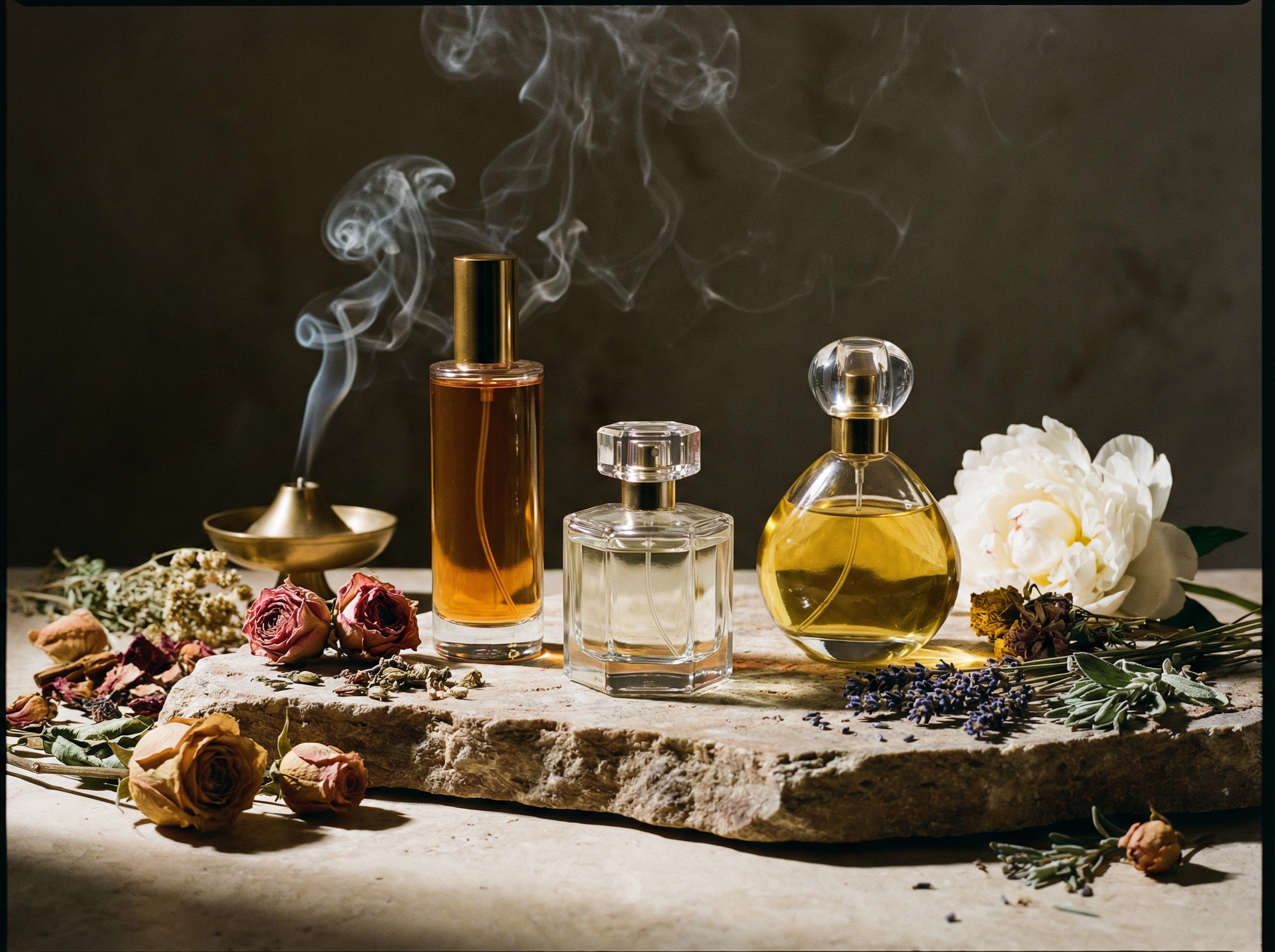
!A collection of various unisex perfume bottles arranged artistically on a marble surface.
Aromatic Anarchy: Deconstructing the History of Gendered Perfume
For the vast majority of human history, the notion of a fragrance belonging to a specific gender would have been utterly nonsensical. In the great civilisations of antiquity—from the sun-drenched banks of the Nile in Egypt to the bustling forums of Rome and the opulent courts of Persia—fragrance was a universal language of luxury, spirituality, and personal hygiene. Perfumes, in their earliest forms as incense, unguents, and infused oils, were deeply woven into the fabric of society. The Egyptians, masters of aromatics, created complex blends like Kyphi, a potent concoction of some sixteen ingredients including myrrh, frankincense, juniper, and resins, which was burned as incense in temples and also used as a therapeutic tonic. Both male and female pharaohs and nobles were entombed with precious scented oils, believed to be essential for the afterlife.
This gender-fluid approach to scent continued for centuries. Fragrances were valued for the rarity of their ingredients, the complexity of their composition, and their perceived effects on the mind and body, not for any constructed gender association. The 19th century, however, heralded a seismic shift. The industrial revolution and the birth of modern chemistry democratised perfumery. The isolation of synthetic molecules like coumarin (with its scent of new-mown hay) and vanillin allowed for the creation of novel scent profiles and the mass production of fragrances at a scale never before imagined. With this new accessibility came the rise of a new consumer: the bourgeoisie. This burgeoning middle class, eager to display its newfound status, became the primary target for the modern fragrance industry.
It was in this commercial crucible that the gendering of scent was forged. Marketers, seeking to capture distinct segments of this new market, began to build narratives around their creations. They drew upon prevailing Victorian ideals of masculinity and femininity to create a powerful, if entirely artificial, olfactory dichotomy. Sweet, delicate, and ephemeral floral compositions were designated as ‘feminine’, mirroring the era's ideal of womanhood. In contrast, rich, robust, and enduring notes of leather, wood, tobacco, and fougère (fern) were deemed ‘masculine’, reflecting ideals of strength and stability. Iconic fragrances of the era, such as Houbigant's Fougère Royale (1882), created for men, and Guerlain's Jicky (1889), which was initially intended for men but became a sensation among women, were instrumental in cementing these olfactory stereotypes. This strategic gendering proved immensely profitable, and for more than a century, it remained the dominant paradigm, shaping not only what we wore, but how we understood the very nature of scent itself. The early 20th century saw this trend further solidified with the rise of designer fragrances. Paul Poiret, the visionary couturier, was the first to launch a fragrance line linked to his fashion house, further intertwining scent with the performance of a specific, gendered identity. This set a precedent that would be followed by virtually every major fashion house for decades to come, from Chanel's iconic No. 5, the epitome of feminine elegance, to Dior's Eau Sauvage, the benchmark for masculine freshness. The message was clear and consistent: your fragrance was an essential accessory, a final touch to a carefully constructed, gender-appropriate presentation of self. This era of fragrance history, while producing many timeless masterpieces, was fundamentally rooted in a binary understanding of gender, a perspective that would remain largely unchallenged until the cultural shifts of the late 20th century began to question the very foundations of these rigid categories.
The CK One Revolution: A Legacy of Liberation and Modernity
By the early 1990s, the cultural landscape was primed for disruption. The opulence and excess of the 1980s had given way to a more minimalist, raw, and androgynous aesthetic, championed by grunge music and fashion designers like Helmut Lang and Calvin Klein himself. It was against this backdrop that CK One was launched in 1994, and its impact was nothing short of seismic. It was not merely a new fragrance; it was a cultural manifesto, a bold declaration of a new, more inclusive era.
The genius of CK One lay in its holistic and uncompromising vision. The fragrance, a masterful creation by perfumers Alberto Morillas and Harry Fremont, was a study in clean, transparent simplicity. It opened with a bright, effervescent burst of bergamot, lemon, and mandarin, softened by a heart of green tea, jasmine, and violet, and settled into a warm, subtle base of musk and amber. It was a scent that felt both familiar and entirely new, a universally appealing composition that deliberately eschewed the heavy, gendered tropes of the past. It was, in essence, the olfactory equivalent of a clean white t-shirt and a pair of perfectly worn-in jeans.
The marketing campaign, shot in stark black and white by Steven Meisel, was as revolutionary as the scent itself. It featured a diverse cast of models and artists, including a young Kate Moss, whose waifish, androgynous look defined the era. The images depicted a tribe of individuals, a community united not by conformity, but by a shared spirit of youthful rebellion and authenticity. The message was clear: CK One was not about being a man or a woman; it was about being yourself. This resonated powerfully with Generation X, a demographic that was inherently sceptical of traditional advertising and hungry for something real.
The legacy of CK One extends far beyond its commercial success. It irrevocably altered the fragrance industry, proving that a gender-neutral scent could be a global blockbuster. It challenged the very foundations of how we think about scent and its connection to identity, demonstrating that fragrance could be a powerful tool for self-expression and a way to explore the fascinating psychology of fragrance and mood. CK One paved the way for the niche and artisanal brands that would follow, creating a space for a more creative, personal, and inclusive approach to perfumery to flourish. It democratized fragrance, not just in terms of price point, but in terms of accessibility and attitude. It stripped away the pretension and formality that had long been associated with luxury perfume, and in its place, it offered a vision of fragrance that was casual, cool, and deeply personal. The iconic, minimalist bottle, designed to resemble a Jamaican rum flask, further underscored this ethos of understated, effortless style. More than two decades after its launch, CK One remains a bestseller, a testament to its timeless appeal and its enduring status as a symbol of a more fluid and liberated approach to beauty.
The New Guard: The Philosophies of Modern Unisex Perfume Houses
The fertile ground tilled by CK One has given rise to a vibrant and flourishing ecosystem of modern unisex perfume houses. These brands, often described as ‘niche’ or ‘artisanal’, have made gender-neutrality a foundational pillar of their identity. They represent a return to the artistry and authenticity of traditional perfumery, prioritising high-quality ingredients, creative expression, and a direct connection with the consumer over mass-market appeal. Among the most influential pioneers of this new guard are Le Labo and Byredo, two brands that have redefined luxury fragrance for the 21st century.
Le Labo: The Soulful Science of Slow Perfumery
Founded in New York in 2006 by Fabrice Penot and Edouard Roschi, Le Labo—which translates to “The Lab”—was conceived as a direct response to the commercialism and lack of soul they perceived in the mainstream fragrance industry. Their philosophy is rooted in the Japanese concept of wabi-sabi, the appreciation of imperfection and transience. This manifests in a focus on craftsmanship, the beauty of raw materials, and the unique experience of each individual. The brand’s core collection consists of a tight edit of fragrances, each named after its most prominent note and the number of ingredients in its composition.
What truly sets Le Labo apart is its retail experience. Each fragrance is freshly hand-blended for the customer at the point of sale, and the bottle is adorned with a personalised, typewritten label. This act of personalisation transforms the purchase from a simple transaction into a memorable, intimate experience. It reinforces the idea that the fragrance is not a mass-produced commodity, but a personal creation. Their most iconic scent, Santal 33, a smoky, leathery composition inspired by the American West, became a global phenomenon, a testament to the power of a fragrance that tells a compelling story. By rejecting gendered marketing and focusing on the art of perfumery, Le Labo has cultivated a fiercely loyal following and demonstrated a significant global appetite for fragrances that are both intelligent and soulful. Their approach also resonates with the growing consumer demand for clean and transparent fragrances, where the quality and origin of ingredients are paramount. The brand's commitment to sustainability, with its refillable bottles and vegan formulations, further enhances its appeal to a conscious consumer base that values both ethics and aesthetics. Le Labo's success has proven that there is a significant market for fragrances that are not just beautiful, but also meaningful.
!A close-up shot of a Le Labo Santal 33 perfume bottle, highlighting its minimalist label.
Byredo: Olfactory Narratives and Emotional Connections
Byredo, founded in Stockholm in 2006 by Ben Gorham, approaches fragrance as a medium for storytelling. Gorham, a native Swede with an Indian mother and a Canadian father, has a background in fine art and a fascination with the power of scent to evoke memories and emotions. This multicultural perspective and artistic sensibility are at the heart of the Byredo brand. Each fragrance is a carefully constructed narrative, a translation of a specific memory, idea, or emotion into a complex olfactory composition. The brand’s aesthetic is one of understated, minimalist luxury, with its iconic, weighty glass bottles and simple black caps.
Byredo’s scents are designed to be genderless, allowing the wearer to connect with the story and the emotions of the fragrance on their own terms. Gypsy Water, one of the brand’s best-loved creations, is a tribute to the romanticism of Romani culture, a fresh, woody scent that evokes the feeling of a nomadic life spent in nature. Mojave Ghost is an ethereal, woody composition inspired by the resilient ghost flower that blooms in the arid Mojave Desert, a beautiful metaphor for grace and strength in harsh conditions. Byredo’s success lies in its ability to forge a deep emotional connection with its audience. It has proven that the power of a fragrance lies not in who it is for, but in the stories it tells and the feelings it inspires. The brand has expanded its universe to include makeup, body care, and leather goods, all infused with the same artistic and narrative-driven approach. Byredo is not just selling a product; it is selling a world, a perspective, a way of seeing and feeling that transcends the ordinary and celebrates the power of personal history.
The Art of Selection: A Practical Guide to Choosing Your Signature Unisex Scent
Navigating the expansive and exciting world of unisex fragrances can feel like a deeply personal quest. With an ever-growing array of options, finding a scent that feels like a true extension of yourself can be both a challenge and a delight. The key to a successful search is to cast off the shackles of preconceived notions and marketing jargon. Instead, embark on an olfactory exploration guided by your own intuition and preferences. Here are some practical, expert-style tips to help you discover your perfect gender-neutral fragrance.
Trust Your Nose, Not the Narrative
The single most important principle in fragrance selection is to trust your own sense of smell above all else. The fragrance industry is masterful at weaving compelling narratives, but the only story that truly matters is the one a scent tells on your skin. Allow yourself to be guided by pure attraction. Spend unhurried time in perfume boutiques, sample fragrances liberally on your skin (not just on paper blotters), and, most importantly, observe how they evolve over several hours. A fragrance is a dynamic entity with a top, heart, and base, and its true character is only revealed over time.
Develop Your Olfactory Literacy: Understanding Scent Families
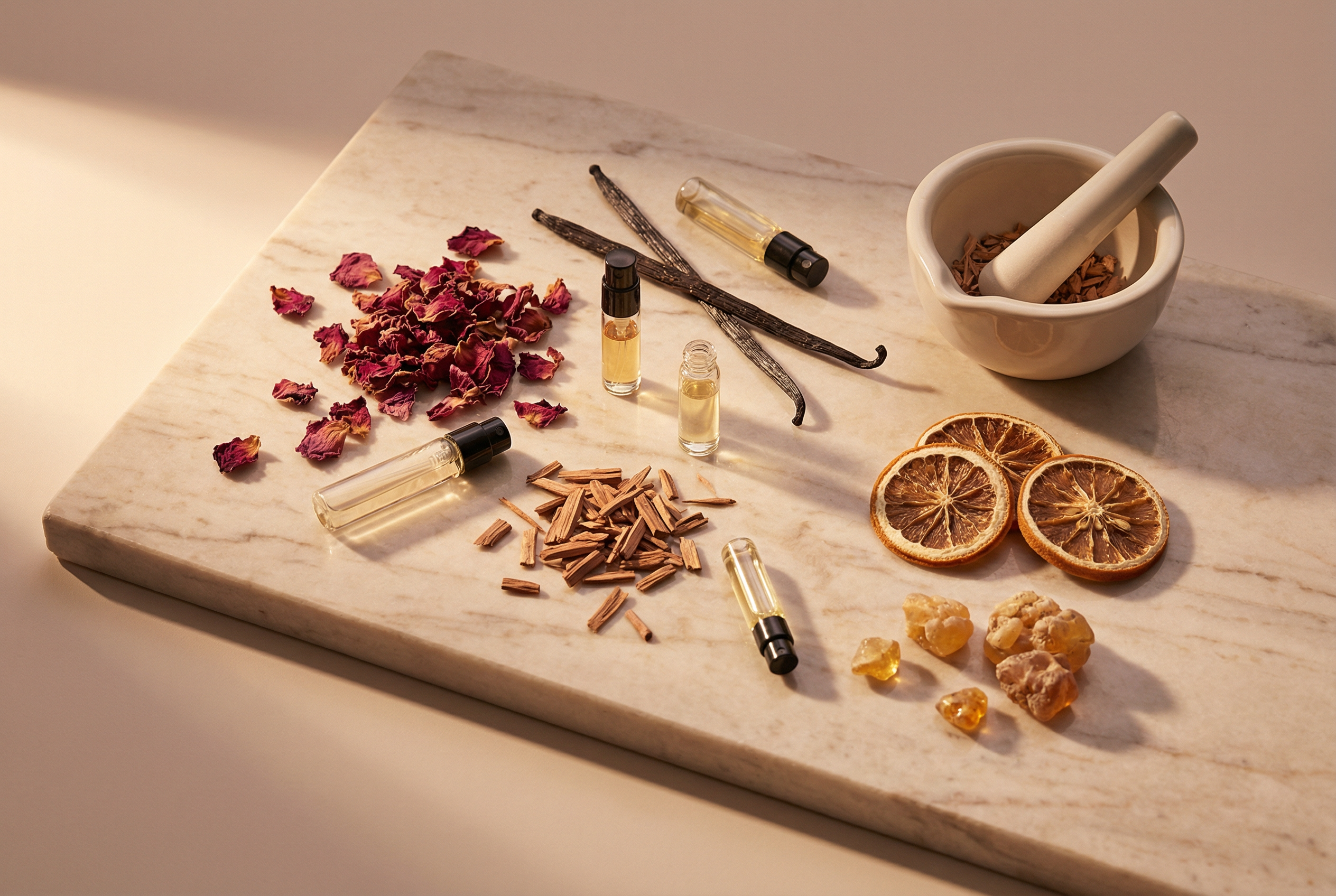
While the most innovative unisex fragrances often defy easy classification, familiarising yourself with the fundamental scent families provides a valuable framework for your exploration. It allows you to identify the types of notes you are consistently drawn to, making your search more focused and enjoyable. The primary families you will encounter include:
- Citrus: Characterised by their fresh, zesty, and effervescent nature. Think of the uplifting aromas of bergamot, lemon, grapefruit, and mandarin. These scents are often associated with energy, cleanliness, and optimism.
- Woody: This family encompasses a wide spectrum of earthy, warm, and grounding aromas. Notes like sandalwood, cedarwood, vetiver, and patchouli provide a sense of stability and sophistication. For those intrigued by the deeper, more complex woody scents, our complete guide to oud fragrance offers an in-depth exploration.
- Spicy: These fragrances are defined by their warmth, sensuality, and exoticism. Notes derived from culinary spices like cinnamon, clove, cardamom, and black pepper add a captivating and often mysterious dimension to a composition.
- Green: This family captures the crisp, fresh, and vibrant scents of nature. Think of freshly cut grass, crushed leaves, galbanum, and herbs. Green fragrances often feel modern, clean, and invigorating.
- Aquatic (or Marine): These scents evoke the clean, fresh, and invigorating feeling of the ocean. Using synthetic notes like calone, they capture the essence of sea spray, salty air, and coastal breezes.
- Floral: While historically associated with feminine fragrances, florals are a cornerstone of many exceptional unisex scents. When balanced with woody, spicy, or citrus notes, flowers like rose, jasmine, iris, and tuberose can be rendered in a way that is complex, intriguing, and entirely gender-neutral.
The Alchemical Reaction: The Importance of Skin Chemistry
Never underestimate the transformative power of your own skin. Each person's skin has a unique pH balance and produces natural oils that will interact with a fragrance, altering its character and creating a scent that is entirely unique to them. This is the magical, alchemical aspect of perfumery. A fragrance that smells divine on a friend might fall flat on your own skin, or vice versa. This is precisely why testing a fragrance on your skin is a non-negotiable step in the selection process. Apply a small amount to a pulse point, such as your wrist or the crook of your elbow, and resist the urge to rub your wrists together, as this can crush the delicate top notes. Allow the fragrance to breathe and develop for at least a few hours to experience its full, multifaceted journey.
A Comparative Guide to Iconic Modern Unisex Fragrances
To further assist you in navigating the expanding universe of unisex scents, we have curated a comparative guide to some of the most popular and influential fragrances that have defined the modern gender-neutral movement.
| Fragrance | Brand | Key Notes | Olfactory Profile | The Aesthetic Magazine's Take |
|---|---|---|---|---|
| Santal 33 | Le Labo | Sandalwood, Cedarwood, Cardamom, Violet, Papyrus | Woody, Spicy, Leathery | The scent that defined a generation of creatives. A modern icon that is at once rugged and refined, with a distinctive smokiness that is instantly recognisable. |
| Gypsy Water | Byredo | Bergamot, Juniper Berries, Pine Needles, Incense, Sandalwood | Woody, Aromatic, Fresh | An ode to a nomadic spirit. This is a beautifully ethereal and uplifting fragrance that feels like a walk through a pine forest on a crisp morning. |
| CK One | Calvin Klein | Bergamot, Lemon, Green Tea, Cardamom, Musk, Amber | Citrus, Aromatic, Fresh | The original game-changer. A clean, minimalist, and effortlessly cool scent that remains as relevant today as it was in 1994. The epitome of accessible androgyny. |
| Molecule 01 | Escentric Molecules | Iso E Super | Woody, Velvety, Abstract | A fascinating and minimalist creation that is more of a scent aura than a traditional perfume. It adapts to the wearer's skin, creating a subtle, personal, and utterly captivating effect. |
| Black Orchid | Tom Ford | Black Truffle, Ylang-Ylang, Bergamot, Blackcurrant, Patchouli, Incense | Oriental, Chypre, Floral | A bold, dramatic, and unapologetically sensual fragrance. While often marketed towards women, its dark, earthy, and spicy complexity makes it a powerful and sophisticated choice for any gender. |
| Wood Sage & Sea Salt | Jo Malone London | Ambrette Seeds, Sea Salt, Sage | Woody, Aromatic, Marine | A windswept walk along the British coast, bottled. This is a fresh, mineralic, and sophisticated scent that is both calming and invigorating. A perfect example of understated elegance. |
This table serves as a starting point for your personal olfactory journey. The true beauty of fragrance lies in the personal connection you forge with a scent, so we encourage you to explore, experiment, and, most importantly, enjoy the process of discovery.
The Future of Fragrance: A Scent for Every Self, A Story for Every Soul
The ascendance of the unisex fragrance is not a mere market trend; it is a clear and definitive reflection of a broader cultural paradigm shift. It signifies a collective move away from the rigid confines of gender and towards a more fluid, authentic, and personal understanding of identity. The modern fragrance landscape is a vibrant testament to this evolution, a diverse and dynamic world where creativity, artistry, and individuality are the most coveted qualities.
As we continue to embrace this new era of aromatic freedom, the lines between ‘masculine’ and ‘feminine’ will inevitably continue to blur, not just in fragrance but in all aspects of beauty and self-expression. The future of fragrance is not about creating scents for men or for women; it is about creating scents for people. It is about crafting olfactory stories that resonate with the soul, evoke powerful emotions, and empower individuals to express their unique identity to the world. Whether you are drawn to the smoky, intellectual allure of a woody scent, the bright, joyful optimism of a citrus blend, or the complex, sensual mystery of a spicy oriental, there is a universe of unisex fragrances waiting to be discovered. In this liberated landscape, the only rule is to follow your own nose. The future of fragrance is personal, it is expressive, and it smells utterly sublime.
Frequently Asked Questions
What truly defines a fragrance as unisex?
A fragrance is defined as unisex not by its ingredients, but by its marketing and intent. A unisex scent is one that is consciously created and presented to be worn and enjoyed by any person, irrespective of their gender identity. These fragrances typically feature a sophisticated balance of notes that defy easy categorisation within the traditional masculine/feminine olfactory framework.
Is the concept of unisex fragrances a recent phenomenon?
While the term and its popularity are contemporary, the concept is ancient. For most of history, perfumes were not gendered. The practice of assigning gender to scents is a relatively modern marketing invention, born out of the industrialisation of the perfume industry in the 19th and 20th centuries. The current movement can be viewed as a return to a more authentic and inclusive relationship with fragrance.
How can I determine if a unisex fragrance will complement my personal style?
The most reliable method is to test the fragrance on your own skin. Your unique body chemistry—your skin’s natural oils and pH level—will interact with the perfume to create a scent that is singular to you. A fragrance that is captivating on a friend may express itself differently on your skin. We recommend taking your time, sampling a diverse range of scents, and trusting your own olfactory instincts.
Is it advisable to layer different unisex fragrances?
Absolutely. Layering fragrances is a refined art form that allows you to create a bespoke scent that is entirely your own. You can experiment by combining different unisex scents to craft a signature blend that perfectly reflects your mood or personal style. A sound approach is to layer fragrances from the same or complementary scent families, such as a citrus over a woody base.
Where are the best places to purchase high-quality unisex fragrances?
Unisex fragrances are widely available from a variety of retailers. High-end department stores, specialised perfume boutiques, and brand-specific websites are excellent resources. Many niche and independent brands, which often lead the way in olfactory innovation, focus exclusively on creating gender-neutral scents. We encourage you to explore these avenues and always ask for samples to test at your leisure.
Are there particular notes I should look for when exploring unisex fragrances?
While there are no definitive rules, certain notes are frequently celebrated in unisex compositions for their inherent versatility and broad appeal. These include bright citrus notes like bergamot and neroli, grounding woody notes such as sandalwood and cedarwood, and intriguing spicy notes like cardamom and black pepper. However, the true beauty of the unisex fragrance movement lies in its diversity, so remain open to all scent families.
What is the distinction between the terms ‘unisex’ and ‘gender-neutral’ in perfumery?
The terms ‘unisex’ and ‘gender-neutral’ are often used synonymously within the fragrance world. Both refer to scents that are not marketed towards a specific gender. ‘Gender-neutral’ is arguably a more contemporary term that aligns with a broader cultural conversation around inclusivity and the recognition of non-binary and fluid gender identities. Both terms, however, signify a move towards a more progressive and personal approach to scent.
Building a Fragrance Wardrobe
Just as you have a wardrobe of clothes for different occasions and seasons, you can also build a wardrobe of fragrances. This allows you to choose a scent that reflects your mood, the time of day, or the event you are attending. A fragrance wardrobe might include a light, fresh citrus for daytime wear, a warm, spicy scent for evenings, and a complex, intriguing fragrance for special occasions. Building a fragrance wardrobe is a slow and enjoyable process of discovery. Start with one or two scents that you love, and gradually add to your collection over time. Don't be afraid to experiment with travel-sized vials or discovery sets, which are an excellent way to explore a brand's offerings without committing to a full bottle.